Stitched in Defiance: The Radical, Banned, and Gloriously Resilient History of the Áo Dài
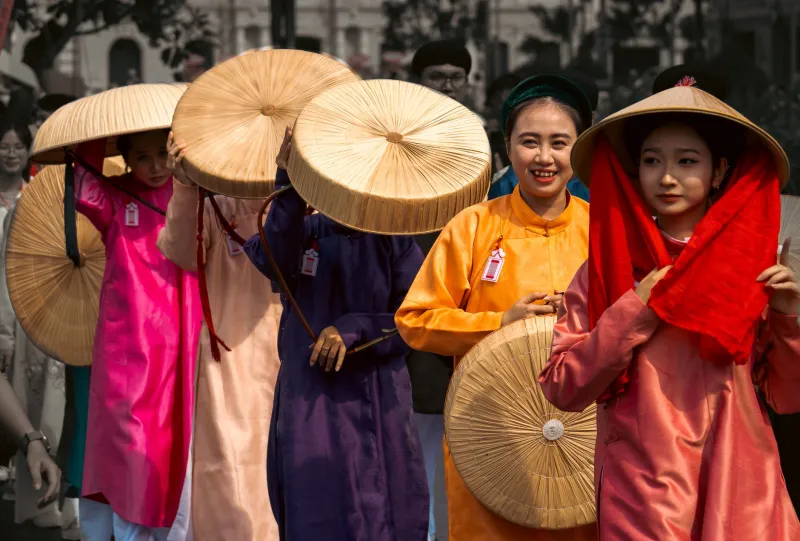
You've seen it. The long silk tunic split to the hip, worn over wide-leg trousers, moving like water in the Saigon heat. You've seen it on flight attendants, on wedding guests, on schoolgirls cycling past French colonial facades. You've maybe even seen a tourist version hanging in a Bến Thành Market stall, price tag fluttering in the fan breeze.
But here's what the souvenir rack doesn't tell you: the áo dài was once considered a threat. It was banned. Mocked as bourgeois. Scrubbed from public life by a government that saw elegance as a form of ideological contamination. The fact that it survived — and that today it thrives in Saigon's fashion studios, on runway shows, and in the wardrobes of a new generation of Vietnamese women who wear it on their own terms — is not a story about beauty. It's a story about resistance.
The Garment That Kept Reinventing Itself
The áo dài's origins are messier than the polished mythology suggests. Its earliest ancestors were worn by Vietnamese nobility in the 18th century under the Nguyễn lords, but the silhouette you'd recognize today didn't crystallize until the 1930s. That's when Nguyễn Cát Tường — a Hanoi-based designer who went by the French name Lemur — fused traditional Vietnamese dress with Art Deco influences and European tailoring. The result was sleeker, more fitted, and deliberately modern.
It caused a scandal. Critics accused Lemur of corrupting Vietnamese culture with Western aesthetics. Supporters called it a reclamation — proof that Vietnamese style could be cosmopolitan without being colonial. Sound familiar? Saigon has been having that argument about itself ever since.
Through the 1940s and 1950s, the áo dài evolved again. Saigon's tailors — many of them women running small shops in Chợ Lớn and along Tự Do Street — began cutting the fabric closer to the body, raising hemlines, widening sleeves. By the time South Vietnam was in full swing in the early 1960s, the garment had become a symbol of the city itself: stylish, cosmopolitan, a little provocative, and deeply self-assured.
Madame Nhu — the sharp-tongued sister-in-law of President Diệm, sometimes called the Dragon Lady — wore a version with a plunging neckline that became notorious enough to draw international headlines. Whether you admired her or despised her politics, you couldn't ignore the dress. That was the point.
When the Government Came for the Fabric
Then 1975 happened.
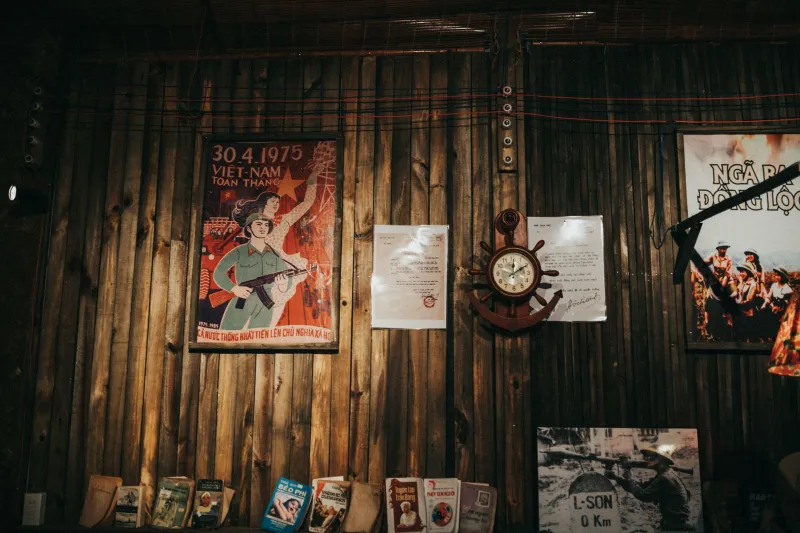
After reunification, the new government in Hanoi brought with it a cultural austerity that had little patience for what the áo dài represented. In the south, the garment was associated with the old regime — with bourgeois femininity, American-era decadence, and a Saigon identity that the new order was determined to dismantle. Women were encouraged, and in some contexts pressured, to wear simpler clothing. The áo dài didn't disappear overnight, but it retreated. Seamstresses who had built careers on it quietly pivoted. Fabric shops shifted their stock.
For roughly a decade, the garment existed in a kind of cultural limbo — worn at weddings and funerals if at all, treated as a relic of a world that was supposed to be over.
What kept it alive during those years wasn't institutions or government programs. It was individual women — grandmothers who kept their old áo dài folded in trunks, seamstresses who never fully stopped cutting the pattern, daughters who watched and remembered. The knowledge stayed in the hands, even when it couldn't be displayed publicly.
The Comeback No One Officially Announced
The Đổi Mới economic reforms of 1986 cracked the door open. As Vietnam began cautiously re-engaging with international markets, the cultural mood shifted. The áo dài started reappearing — first at official state functions, where it could be framed as national heritage rather than southern nostalgia, and then gradually in everyday life.
By the 1990s, something remarkable was happening in Saigon's fashion circles. A new generation of designers — many of them trained abroad or self-taught through a combination of old patterns and sheer nerve — began treating the áo dài not as a museum piece to be preserved but as a living form to be pushed. Designers like Sĩ Hoàng became something close to cult figures, their ateliers turning out pieces that honored the traditional silhouette while experimenting with fabric, color, and embroidery in ways that felt genuinely contemporary.
These weren't people making costumes. They were making arguments — about what Vietnamese femininity could look like, about who got to define national identity, about whether beauty itself could be a form of political reclamation.
What It Means to Wear It Now
Walk into one of Saigon's better áo dài studios today — places like Thủy Design House in District 3, or the cluster of custom tailors on Lý Tự Trọng — and you'll find something more nuanced than nostalgia. Young Vietnamese women are commissioning pieces that mix traditional embroidery with unconventional cuts. Designers are working with natural dyes, upcycled silk, and hand-painted panels. There are áo dài made for office wear, for street style, for protest marches.
Yes, protest marches. In recent years, the garment has appeared at environmental demonstrations and women's rights events — worn deliberately, as a statement that Vietnamese femininity doesn't belong to the past or to the state or to the tourist industry. It belongs to whoever is wearing it.
For American visitors, this context tends to reframe the whole experience. The áo dài on display at the Women's Museum, the one worn by your tour guide, the one offered to you at a cultural village photo op — all of it carries weight that the smiling presentation doesn't always convey.
The Fast Fashion Problem (And Why Saigon Is Fighting Back)
None of this means the áo dài is safe. The same globalization that helped revive it also threatens to flatten it. Mass-produced versions — cheap polyester, machine-stitched, cranked out in bulk for the tourist trade — have flooded the market. You can buy one for eight dollars at a souvenir stall. It will look fine in a photo and fall apart by the time you get home.
The designers and tailors who care about the garment's survival are pushing back, but it's a real fight. Custom work is expensive and time-consuming. Young Vietnamese consumers, like young consumers everywhere, are often more interested in international streetwear than traditional dress. The hand skills required to make a truly fine áo dài — the precise cutting, the hand-stitching, the fitting — are not easy to pass on in a world that moves this fast.
Which is exactly why the women who are doing it anyway matter so much.
What to Do With All of This as a Visitor
If you want to engage with the áo dài as something more than a prop, Saigon will let you. Skip the mass-market stalls and find a tailor who does custom work — the process takes a day or two and costs more, but you'll leave with something made for your body by someone who knows what they're doing. Ask questions. Most tailors who've been at this for decades have stories, if you give them the space to tell them.
Visit the Áo Dài Museum out in District 8 — it's not the most visited spot in the city, but it's one of the most honest, tracing the garment's full arc from imperial courts to political prohibition to contemporary runways.
And the next time you see someone wearing an áo dài on the street — really wearing it, not for tourists but for themselves — take a second before you reach for your camera. You're looking at the end result of a very long argument about identity, survival, and who gets to decide what a culture looks like.
Saigon won that argument. Mostly. The fight's not over.