Their Cameras Were There Too: The Vietnamese Photographers Who Shot the War Nobody Exported
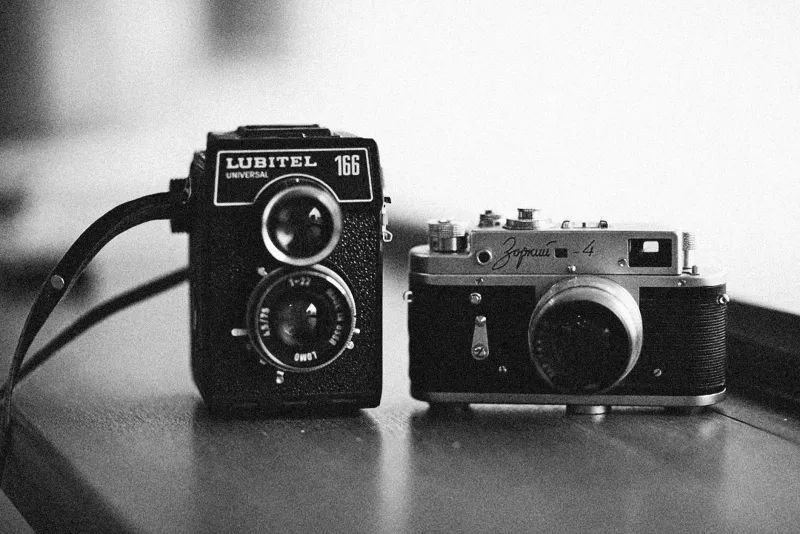
You probably know the photographs. The girl running down the road. The street execution. The monk on fire. These images didn't just document the Vietnam War — they shaped how an entire American generation understood it, protested it, and eventually turned against it. What you probably don't know is who was standing ten feet away, pointing a different lens at the same moment, and never making it into a single American textbook.
They were Vietnamese. They lived in Saigon. And in many cases, they were shooting at far greater personal risk than the foreign press corps drinking at the Caravelle rooftop bar after deadline.
The Invisible Press Corps
By the late 1960s, Saigon was arguably the most photographed city on earth. Foreign correspondents from Life, AP, UPI, and Time crowded the Rex Hotel briefings and fanned out across the delta with military escorts and press passes that offered at least the illusion of protection. Vietnamese photographers working alongside them — or independently — had none of those buffers.
Photographers like Nguyễn Ngọc Hạnh and Huỳnh Thanh Mỹ (the younger brother of the more internationally recognized Huỳnh Công Út, known in the West as Nick Ut) were embedded not with foreign wire services but with their own city, their own neighborhoods, their own grief. Huỳnh Thanh Mỹ was killed in action in 1965 while on assignment for AP — a fact that is sometimes noted as a footnote to his brother's more famous career, which is its own kind of erasure.
But beyond the names that surface occasionally in academic papers, there were dozens of others. Photographers working for South Vietnamese newspapers, for government information offices, for sheer compulsion. People who hauled film through checkpoints, developed prints in cramped apartments, and built archives that nobody in New York was asking to see.
What They Were Shooting
Here's the thing about war photography as most Americans received it: it was curated for emotional and political impact on a foreign audience. The images that landed on the front page of the New York Times were selected, in part, because they communicated something legible to someone in Ohio.
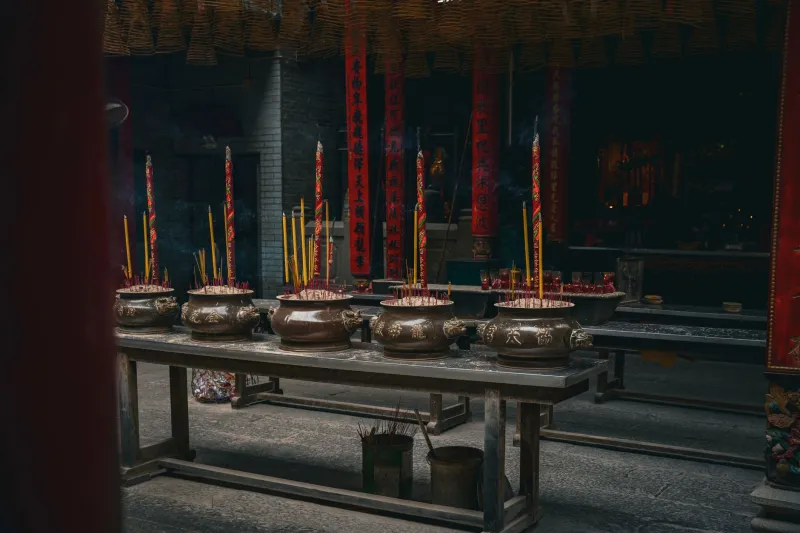
Vietnamese photographers were often shooting something harder to export — the texture of daily survival. A woman selling bánh mì outside a sandbag barricade. Children doing homework in a shelter while artillery thumped somewhere to the north. A grandmother burning incense in a pagoda that had half a wall missing. These weren't images of dramatic climax. They were images of duration — of a people enduring something that had no clean narrative arc.
Nguyễn Mạnh Đan, a Saigon-based photojournalist who worked through the late 1960s and into the early '70s, kept meticulous contact sheets of street-level life in Districts 1 and 3. His work captured the economic surrealism of wartime Saigon — black market goods stacked beside USAID crates, cyclo drivers navigating streets where military jeeps had right of way over everything. His archive survived 1975. He did not, at least not in Vietnam. He spent years in a re-education camp before eventually reaching the United States in the early 1980s.
April 1975 and the Question of the Archive
When Saigon fell on April 30, 1975, the foreign press largely got out. Their film went with them. The story, as the world would later tell it, was already in the can.
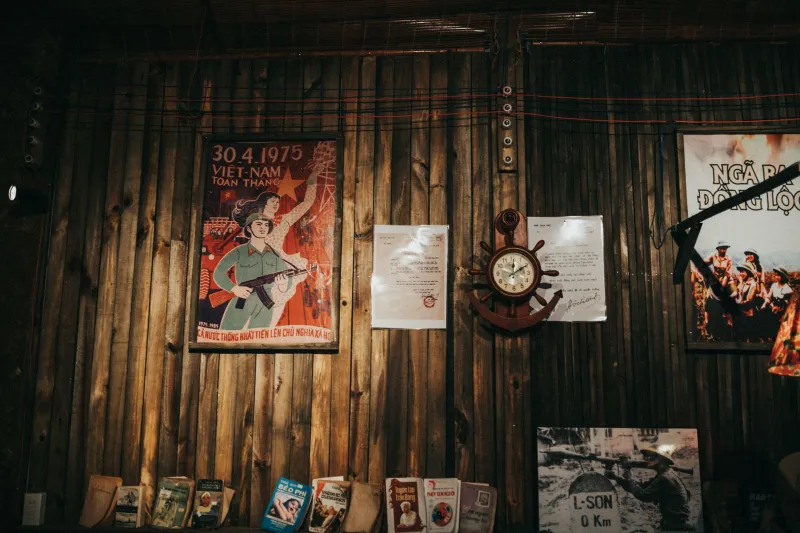
For Vietnamese photographers who stayed — because they had families, because they had nowhere to go, because the helicopters were full — the situation was far more complicated. Film, negatives, and prints became dangerous objects. Images that documented South Vietnamese military life, American presence, or civilian complicity with the former government could be read as evidence of something. Photographers burned archives. They buried negatives in backyards. They handed prints to neighbors and prayed.
Some of what survived did so almost by accident. A daughter who kept a shoebox under her bed for thirty years. A former darkroom assistant who smuggled a few dozen prints out in a false-bottomed suitcase during the early refugee wave. Fragments, essentially, of what had once been coherent bodies of work.
The Reclamation Project
In recent years, a handful of researchers, archivists, and journalists — both Vietnamese and American — have begun the slow work of recovery. The Tim Page and Horst Faas-edited collection Requiem, published in the late 1990s, made a serious attempt to honor photographers from both sides who died covering the conflict, including several Vietnamese names. It was a start, and an important one, though it still framed the story largely through the lens of sacrifice rather than artistry.
More recently, institutions like the War Remnants Museum in Ho Chi Minh City have expanded their photographic collections, though the curatorial angle there reflects its own political context — which is to say, no single archive tells the complete story.
What's emerging slowly, through oral history projects and diaspora community efforts in places like Little Saigon in Orange County, California, is a more fragmented and human picture. Families scanning prints on home flatbeds. Adult children of photographers posting their parents' work on Facebook groups. A kind of crowd-sourced reclamation that the institutions haven't quite caught up to yet.
Walking Saigon With This In Mind
If you're in Ho Chi Minh City and you want to feel the weight of this history, the War Remnants Museum on Võ Văn Tần Street is the obvious starting point — and worth the visit, even accounting for its particular editorial perspective. The photography exhibits there are genuinely powerful, and if you look past the framing, you'll find some of the civilian documentation that never made Western front pages.
But also consider just walking. The streets of District 1 that Nguyễn Mạnh Đan photographed in 1969 are still recognizable in their basic geometry, even buried under new signage and motorbike traffic. The pagodas are still there. The market stalls are still there. The light in the late afternoon still does what it always did.
Someone was photographing all of it. Most of their names we'll never know. But the fact that they were there — pointing cameras at their own city with everything on the line — is itself a kind of evidence that history doesn't always get to decide who witnesses it.
It only gets to decide, sometimes, who gets remembered afterward.
A Different Kind of Souvenir
Tourists leave Saigon with a lot of things — lacquerware, tailor-made shirts, a renewed appreciation for what a proper bowl of phở can do to a person. Consider leaving with a question instead: whose eye was behind the camera, and what did they do with what they saw?
The legend of this city isn't just in the images that made it out. It's in the ones that almost didn't.