The People Nobody Quoted: Saigon's Fixers, Translators, and Cultural Brokers Who Made History Possible
The People Nobody Quoted: Saigon's Fixers, Translators, and Cultural Brokers Who Made History Possible
Open almost any memoir written by a Western journalist who covered the Vietnam War and you'll find a version of the same character. He appears in the second or third chapter, usually introduced with a first name only — Minh, or Tuan, or Lan — described as "indispensable," "brilliant," "fearless." Then the author gets on with their own story, and that person disappears back into the margins where history has always kept them.
Saigon has always attracted outsiders chasing something — a scoop, a contract, a cause, a fresh start. And for every one of them, there was almost always a local standing just off-camera, translating not just the language but the entire operating system of the city. These were the fixers, the interpreters, the cultural brokers. Call them what you want. The point is, without them, most of what the outside world thinks it knows about Saigon would never have happened the way it did.
What a Fixer Actually Does
The word "fixer" undersells it badly. In the journalism world, a fixer is technically someone hired to arrange logistics — transportation, interviews, permits, access. But in a city like wartime Saigon, the job was something closer to real-time cultural translation at extremely high stakes.
A good fixer knew which province a general's family came from and why that mattered when asking him a certain question. They knew that a particular café on Tự Do Street was where one faction of the government liked to talk, and a different café two blocks away was where their rivals went. They understood the social architecture of the city — who owed whom, who despised whom, which silences meant danger and which meant merely bureaucratic inconvenience.
For diplomats, these brokers were even more critical. The U.S. Embassy in Saigon employed dozens of local staff in formal interpreter roles, but the truly valuable relationships were often informal — the Vietnamese clerk who actually understood what a ministry official meant when he said one thing and meant another, or the businesswoman in Cholon who could get a message somewhere it needed to go without leaving a paper trail.
The War Correspondent's Secret Weapon
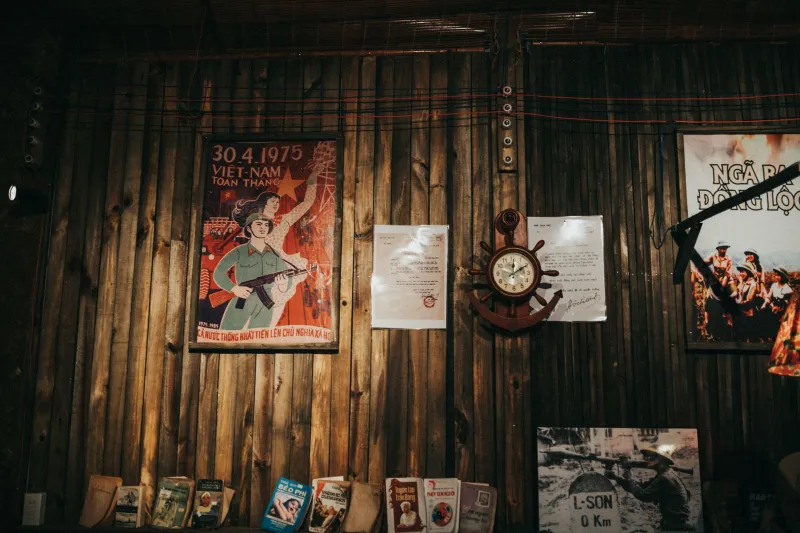
During the American war years, Saigon was arguably the most densely press-covered city on the planet. At peak periods, hundreds of credentialed journalists were operating out of the city, many of them based at the Caravelle or the Continental, filing dispatches that would define how an entire generation of Americans understood the conflict.
Virtually all of them depended on local intermediaries to do their jobs.
Nguyen Thi Loan — a name reconstructed from oral accounts gathered by Vietnamese journalism historians — worked with at least four major American news organizations between 1966 and 1972, never receiving a byline, rarely receiving formal credit of any kind. Descendants describe her as someone who had an almost supernatural ability to get reluctant sources to talk, partly because she understood the specific textures of trust in Vietnamese social culture that most Western reporters simply couldn't access.
She wasn't unique. She was representative.
Philip Caputo, David Halberstam, Neil Sheehan — the correspondents whose names became synonymous with Vietnam War journalism — all wrote, in various ways, about the essential role their local colleagues played. But the framing was almost always the same: the local as a supporting character in someone else's story. The idea that these individuals were themselves authors of history, not just facilitators of it, took decades to gain any traction.
After the War: A Different Kind of Brokerage
The fall of Saigon in April 1975 didn't end the city's need for cultural brokers — it just changed the context entirely. In the years that followed, as foreign aid organizations, NGOs, and eventually businesses began cautiously re-engaging with Vietnam, a new generation of go-betweens emerged.
These weren't war fixers. They were entrepreneurs of access, people who understood both the formal structure of the Socialist Republic's bureaucracy and the informal networks that actually got things done. For American companies that began entering the Vietnamese market after the 1994 trade embargo was lifted, having the right local partner wasn't just helpful — it was legally required in many sectors, and practically essential in all of them.
There's a reason why so many of the Vietnamese Americans who returned to Ho Chi Minh City in the late 1990s and early 2000s found themselves in brokerage roles almost immediately. They carried something rare: fluency in both worlds. They understood American business culture and Vietnamese social culture at a level that neither side could fully replicate on its own.
The Descendants Speak
In recent years, a quiet but significant effort has been underway to document the lives of these intermediary figures before the memories disappear entirely.
Some of this work is being done by Vietnamese-American academics. Some by journalists. Some by the descendants themselves, who grew up hearing fragments of stories that didn't quite add up — a grandfather who seemed to know everyone, a grandmother whose English was suspiciously fluent for someone who'd "never worked with foreigners."
What these accounts reveal, consistently, is a picture of people operating under enormous pressure with very little protection. Fixers and translators who worked with American forces or media during the war faced serious consequences after 1975. Many were sent to re-education camps. Some were imprisoned for years. Their association with the foreign presence that had defined so much of Saigon's mid-century life became, overnight, a liability.
The ones who survived, and their children, carry a complicated legacy. Pride in what they accomplished. Grief over what it cost. And often, a frustration that the people whose careers and reputations they helped build rarely looked back.
Walking Saigon With This in Mind
Here's the thing about visiting Ho Chi Minh City today: the fixer economy never really went away. It just evolved.
The motorbike driver who knows which pho place the locals actually eat at versus the ones that cater to tourists is performing a version of the same function. So is the hotel concierge who can tell you which district is actually worth exploring on a Tuesday night, or the travel agent who knows that a particular temple is only accessible through a specific contact.
Saigon has always been a city that rewards the person who knows someone. And behind every outsider who ever figured this city out — whether they were filing dispatches for the AP in 1968 or launching a restaurant concept in 2019 — there was almost certainly a local who made the introduction, translated the subtext, and quietly made sure the whole thing didn't fall apart.
Next time you're wandering Đồng Khởi or sitting in a café in District 3, think about that invisible infrastructure. The city you're experiencing was built not just by the people whose names are on the plaques, but by the ones who never got a plaque at all.
They were the legend, too. Saigon just forgot to write it down.