Pastel and Power: The Fight to Save Saigon's French Colonial Buildings From the Wrecking Ball
Pastel and Power: The Fight to Save Saigon's French Colonial Buildings From the Wrecking Ball
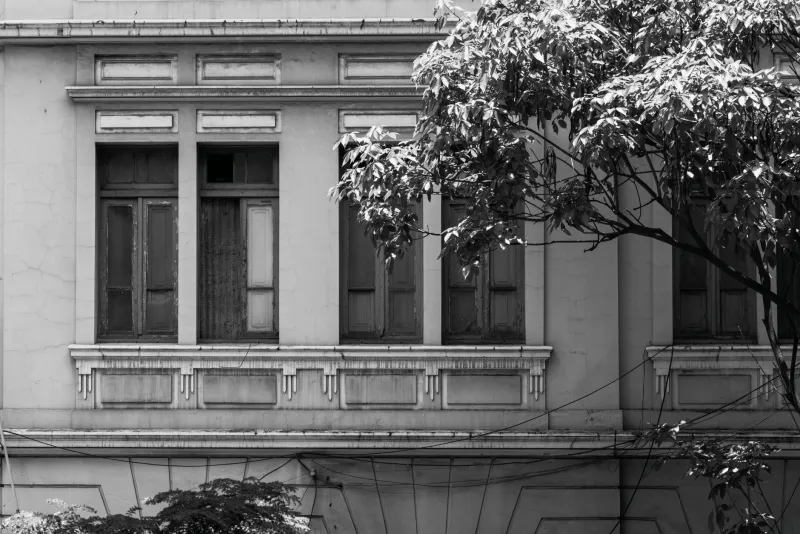
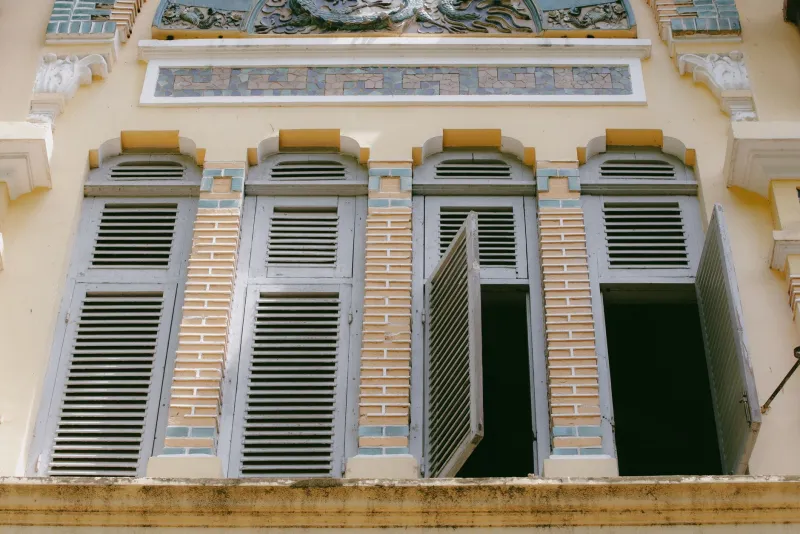
There's a villa on a quiet street in District 3 that looks like it wandered in from the South of France and never found its way home. The shutters are faded to the color of old bone. The ironwork on the balcony is still beautiful in the way that things are beautiful when they're losing the fight against time. A family lives inside — has lived inside for decades — and they have no idea whether they'll be there next year.
That villa doesn't have a famous name. It's not on any tour itinerary. But it sits at the center of one of the most contentious, underreported battles in Southeast Asia: who gets to decide which pieces of Saigon's French colonial past are worth keeping, and who gets to profit when the answer is no.
The Accidental Time Capsule
The French built to impress. Between the 1860s and the mid-twentieth century, they planted administrative buildings, churches, post offices, and residential villas across what was then Saigon with the specific intention of making their presence feel permanent. Wide boulevards, louvered shutters, thick masonry walls designed to breathe in tropical heat — the architecture was a statement of power dressed up as civic generosity.
They didn't plan on leaving. And then they did.
What they left behind is a city layered in contradictions. Roughly 1,300 French-era villas and public buildings are still standing across Ho Chi Minh City, concentrated heavily in Districts 1 and 3. Some have been absorbed into government use. Some house embassies. Some are crumbling quietly behind overgrown walls while legal disputes over ownership drag on for years. And some — more every season — are simply gone, replaced by glass towers and parking structures that could exist in any city on earth.
The buildings that remain aren't just pretty backdrops for Instagram. They're a physical record of a colonial period that Vietnam has spent decades processing, politically and culturally. Saving them isn't simple. Demolishing them isn't simple either.
Who Decides What Stays
In the United States, this kind of debate has a familiar shape. Think about the fights over Confederate monuments in Richmond or New Orleans — the arguments about whether preserving a structure means endorsing what it represents, or whether erasure is its own form of historical dishonesty. The Saigon version is messier, because the stakes are more immediate and the economics are more brutal.
Vietnam's government classifies historic buildings on a tiered system, with the highest-rated structures theoretically protected from demolition. In practice, that protection is inconsistent. Buildings get quietly downgraded. Classifications get disputed. And in a city where a square meter of District 1 real estate can fetch prices that rival Manhattan side streets, the pressure on local officials to approve development is enormous.
Preservationists here will tell you, with varying degrees of resignation, that the system is designed to look protective without actually being protective. A building can hold a heritage designation right up until the moment a developer with the right connections decides it shouldn't.
The Buildings Caught in the Crossfire
The most visible battlegrounds aren't always the most famous ones. The Central Post Office on Công xã Paris Square — designed with Gustave Eiffel's engineering firm involved — is safe for now, partly because it's one of the most photographed buildings in the country. The Notre-Dame Cathedral Basilica of Saigon, currently under long-delayed renovation, isn't going anywhere.
The real fights happen further from the tourist trail.
In District 3, entire blocks of French-era villas have been demolished over the past fifteen years to make room for apartment towers. Residents who were displaced weren't always compensated fairly, and the buildings themselves weren't always formally assessed before the bulldozers arrived. Local historians have documented cases where structures that should have triggered preservation review were torn down before any official process began.
The old Saigon Zoo and Botanical Garden, established by the French in 1864, is one of the oldest in Asia and has been the subject of persistent redevelopment rumors for years. The colonial-era villas lining the streets around Tao Đàn Park — a neighborhood that still feels, on a quiet morning, like a different century — are losing ground to high-rises at a pace that alarms anyone paying attention.
Then there's the question of what happens inside the buildings that survive. Several former French administrative halls have been repurposed as government offices, which preserves the shell but closes the interior to the public entirely. Others have become hotels or restaurants, which keeps them standing but raises legitimate questions about who the preservation actually serves.
The People Doing the Fighting
The preservationists working in this space are a scrappy, underfunded coalition. Vietnamese architects and urban historians who've been sounding alarms for years. Foreign academics who've made Saigon's built environment their life's work. Residents who grew up in these neighborhoods and don't want to lose what makes them distinct.
They're up against developers with deep pockets, a government bureaucracy that moves slowly when it wants to and very fast when it doesn't, and a broader cultural narrative that sometimes frames colonial architecture as a reminder of subjugation rather than a document of survival. That last part is genuinely complicated. There's a real argument — one that deserves respect — that Vietnamese people shouldn't be obligated to treasure buildings that were built to house their oppression.
But the historians counter that demolishing the physical evidence doesn't resolve the history. It just makes it harder to understand. The buildings are witnesses, not endorsements.
What an American Visitor Actually Sees
If you walk the streets of District 3 on a weekday morning, the stakes become tangible in a way that no policy document can convey. You'll pass a perfectly proportioned villa with a "For Project Development" sign zip-tied to its gate. You'll pass another that's been subdivided into a dozen tiny apartments, its original bones still visible beneath decades of improvised renovation. You'll pass a gap in the streetscape — a missing tooth — where something used to stand.
You'll also pass buildings that are, against all odds, being lovingly maintained. Small guesthouses where the owners clearly take pride in the original tile work. Restaurants that kept the shutters and the high ceilings because they understood that the atmosphere was the point.
Saigon has always been a city that absorbs and adapts. That quality is part of what makes it extraordinary. But absorption has limits, and the French colonial streetscapes of Districts 1 and 3 are approaching theirs.
The Version of History That Deserves to Stand
There's no clean answer here, and anyone who tells you otherwise is selling something — probably real estate. The French colonial buildings of Saigon are beautiful and compromised and irreplaceable and contested, all at once. They are, in that way, a pretty accurate metaphor for the city itself.
What's clear is that the decisions being made right now — this year, this decade — are permanent. Once a 130-year-old villa is gone, it's gone in a way that no reconstruction or digital archive can undo. The texture of the city changes. The legibility of its history changes.
The people fighting to keep these buildings standing aren't arguing that French colonialism was good. They're arguing that the evidence of what happened here belongs to the future as much as the past — that a city which can only show you its newest face has lost something essential about itself.
That argument is worth hearing. Especially while there's still something left to save.