Canvas as Witness: The Vietnamese Artists Who Painted Through War and Kept Their Work Alive
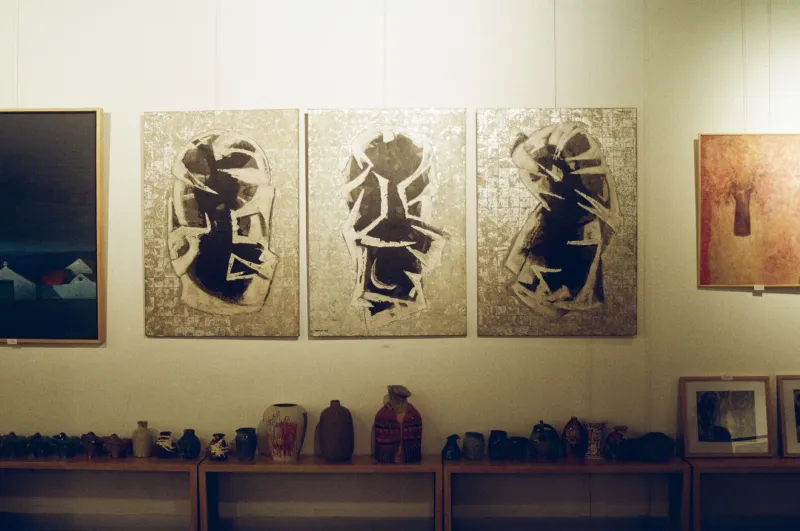
There's a painting in a private gallery off Lê Thánh Tôn Street that most tourists walk right past. It's not large. The colors are muted — ochre, charcoal, a pale wash of blue that might be sky or might be smoke. A woman stands in a doorway. She is looking at something outside the frame. The date on the back reads 1974.
One year later, everything changed.
That painting didn't end up in a museum. It didn't get auctioned at Sotheby's. It survived wrapped in oilcloth, buried under floorboards, carried across borders in a suitcase that also held two changes of clothes and a child's shoe. It survived because someone loved it enough to risk everything for it. And now it hangs in Saigon — in Ho Chi Minh City, technically, though the people who matter most to this story still call it by the old name — waiting for someone to stop and actually look.
Most American visitors to this city know the war through photographs. Eddie Adams. Nick Ut. The images are seared into the national memory. But there's an entire parallel visual history of Saigon that almost no one from the outside world has ever seen, painted by Vietnamese artists trained in the French tradition, reinvented through decades of conflict, and preserved through a combination of luck, stubbornness, and extraordinary courage.
This is where to find it — and how to understand what you're looking at.
The School That Started Everything
In 1925, the French colonial administration opened the École des Beaux-Arts de l'Indochine in Hanoi. The stated goal was to train Vietnamese artists in Western technique. The actual result was something far more interesting: a generation of painters who took oil, lacquer, and silk — materials both inherited and imposed — and made something entirely their own.
Names like Nguyễn Phan Chánh, Tô Ngọc Vân, and Trần Văn Cẩn don't appear in most American art history textbooks, but they should. These were serious, formally trained artists working at the intersection of two visual traditions, producing work that was neither purely French nor purely Vietnamese but something new and electric. Their paintings of rural life, of women in áo dài, of river markets at dawn, carry a weight that has nothing to do with nostalgia and everything to do with observation.
Saigon developed its own distinct artistic scene, looser and more commercially influenced than Hanoi's, shaped by the city's port-town openness and its exposure to American culture through the 1950s and 60s. Southern painters like Nguyễn Trung and Đinh Cường absorbed Abstract Expressionism alongside traditional Vietnamese aesthetics, producing work that felt genuinely international — and genuinely dangerous once the political winds shifted.
The Years Things Disappeared
After 1975, the cultural landscape of Ho Chi Minh City changed fast. Art deemed decadent, bourgeois, or insufficiently revolutionary faced confiscation. Some artists destroyed their own work before anyone else could. Others hid canvases in walls, under beds, in the homes of trusted neighbors. A significant number of artists left with the boat people, carrying little but their memories of technique.
What survived did so through an informal underground of collectors, family members, and ordinary people who understood, on some instinctive level, that these objects mattered. That they were records. That losing them would be a second kind of erasure on top of everything else.
The art that made it through this period has an almost physical quality of endurance. When you stand in front of a lacquer panel from the early 1970s that spent fifteen years in someone's ceiling, you're not just looking at a painting. You're looking at a decision someone made under pressure, and the fact that it paid off.
Where to See It in Saigon Today
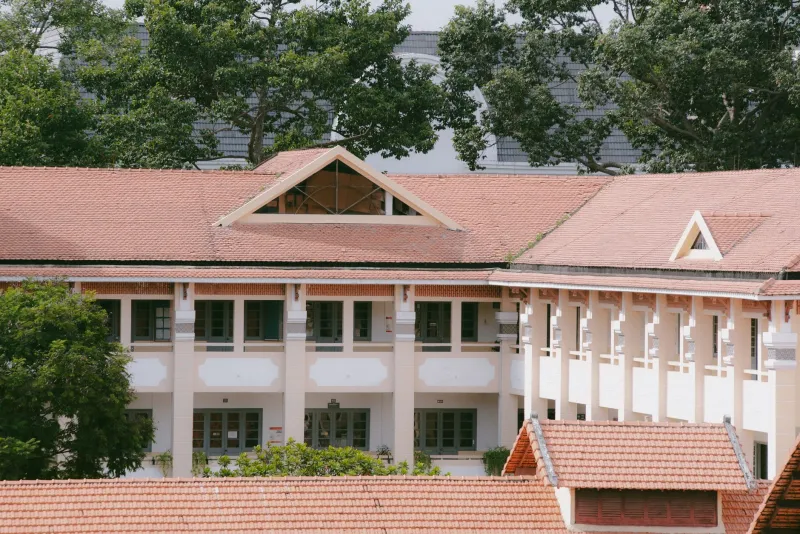
The Fine Arts Museum on Phó Đức Chính Street is the obvious starting point, and it earns its reputation. Housed in a gorgeous French colonial building that once served as a private villa, the museum's three floors hold a genuinely impressive collection spanning lacquerware, silk paintings, oil canvases, and sculpture from the colonial era through the present. The labeling is minimal by Western museum standards, so go with an open mind and let the work speak first. You can always research specifics later.
For something more intimate, the gallery scene around Đồng Khởi and the surrounding streets rewards slow walking. Spaces like Craig Thomas Gallery and L'Espace (the French Institute's cultural center) rotate serious exhibitions that bridge historical Vietnamese work with contemporary artists responding to the same city, the same questions. The conversations happening on these walls are ongoing.
The Nguyen Art Foundation represents a more curatorial approach, championing Vietnamese contemporary art with international ambitions. It's a good place to understand where the tradition is going, which makes the historical work feel less like a relic and more like an active influence.
For collectors — or anyone who wants to go deeper — the antique shops along Lê Công Kiều Street occasionally surface older works, though authenticating anything requires expertise and patience. If you're serious about buying, engage a reputable gallery with provenance documentation. The market for Vietnamese fine art has grown significantly, and with that growth has come, inevitably, forgery.
How to Actually Look at This Art
Here's something American visitors sometimes miss: Vietnamese fine art, particularly from the colonial and wartime periods, doesn't announce itself the way Western art often does. It doesn't shout. The emotional register tends toward restraint — a quality that can read as blankness if you're moving too fast, but reveals extraordinary depth if you slow down.
Look at what's outside the frame. Vietnamese painters of this era were working under censorship, political pressure, or both, and learned to embed meaning in absence. The woman looking at something you can't see. The market scene with one stall conspicuously empty. The landscape that should be peaceful but somehow isn't.
Ask gallery staff about the artist's biography. Context transforms everything. A still life painted in 1972 by someone living in a city that was being bombed is not the same object as a still life painted in a Paris studio. The mangoes in the bowl are the same mangoes. The painting is not the same painting.
The Living Tradition
Saigon's contemporary art scene is thriving in ways that would have been unimaginable thirty years ago. Young Vietnamese artists are engaging with the city's history directly — processing trauma, reclaiming narratives, using the visual language their predecessors developed and pushing it into territory that's genuinely new.
Galleries host regular openings that double as social events, drawing a mix of local artists, expats, collectors, and curious visitors. Show up. Talk to people. Buy a small work if something moves you. The best souvenir you can bring home from Saigon isn't a lacquered chopstick set from Ben Thanh Market. It's something made by a person who grew up in this city and put their understanding of it onto a surface that will outlast both of you.
The painting on Lê Thánh Tôn Street — the woman in the doorway, the year 1974 — is still there. The gallery owner will tell you its story if you ask. He's told it many times. He never gets tired of it, because the story is the point.
Saigon has always been a city that survived by remembering. Its artists figured that out before anyone else did.