Check In to History: Saigon's Most Legendary Hotel Rooms and the Stories Locked Inside Them
Check In to History: Saigon's Most Legendary Hotel Rooms and the Stories Locked Inside Them
Most travelers pick a hotel based on the Wi-Fi rating and whether breakfast is included. In Saigon, there's a third criterion worth adding to that checklist: did anyone famous — or infamous — once sit in this room watching the city burn, bloom, or reinvent itself entirely?
Because a handful of hotels here didn't just witness history. They hosted it. Correspondents filed career-defining dispatches from their balconies. Novelists turned their bars into fiction. Generals and spies and diplomats moved through their lobbies like pieces on a board game nobody else could see. If you're the kind of traveler who wants your accommodation to actually mean something, Saigon is your city.
The Continental: Where Graham Greene Ordered His Drinks and His Intrigue
Start here. You almost have to.
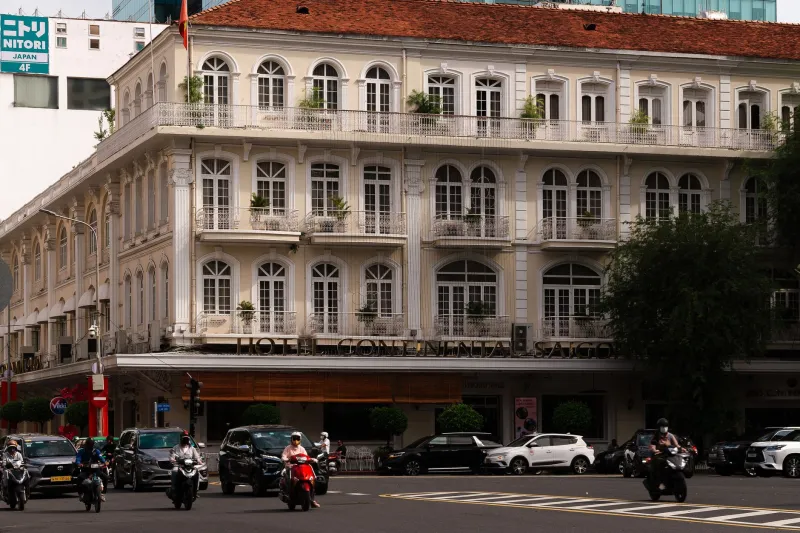
The Continental Hotel on Đồng Khởi — originally Rue Catinat under the French — opened in 1880, which makes it older than most American cities feel in their bones. By the time Graham Greene arrived in the early 1950s as a correspondent covering the First Indochina War, the Continental had already accumulated decades of colonial swagger. He drank on its terrace. He watched. He listened to the French officers and the American advisors who were just beginning to show up in meaningful numbers, each group convinced they understood this place better than the last.
What came out of those sessions was The Quiet American, one of the most prescient political novels of the 20th century. Greene's fictional Saigon maps almost perfectly onto the real one — the rooftop bars, the paranoia, the beautiful city straining under the weight of outside ambitions. American readers who come to the Continental today and sit at the terrace bar tend to go a little quiet. The novel's critique of American naivety in Southeast Asia lands differently when you're sitting exactly where Greene was sitting when he wrote it.
The hotel has been renovated since, but the bones are original. The ceiling fans still turn slowly. Order a Saigon Beer or something stronger and give Greene's ghost a few minutes of your time.
The Caravelle: Eleven Floors of Journalism History
A few blocks away, the Caravelle Hotel opened on New Year's Eve 1959 — almost poetically, right on the edge of a decade that would swallow Vietnam whole. It was immediately the most modern building in the city, and it attracted the kind of people who needed to be close to the story without actually being in the crossfire.
During the American war years, the Caravelle's upper floors became the de facto headquarters of the international press corps. CBS, ABC, NBC, the AP — they all kept rooms here. Correspondents would file their reports, come back to the rooftop bar on the ninth floor, and watch artillery flashes light up the horizon like a distant thunderstorm. The Saigon they were describing to American living rooms every night was visible from their bar stools.
On April 29, 1975 — the night before the fall — journalists on that rooftop watched the city's final hours play out in real time. The images that defined American memory of the war's end were captured by people who had been sleeping here, eating here, drinking here for years.
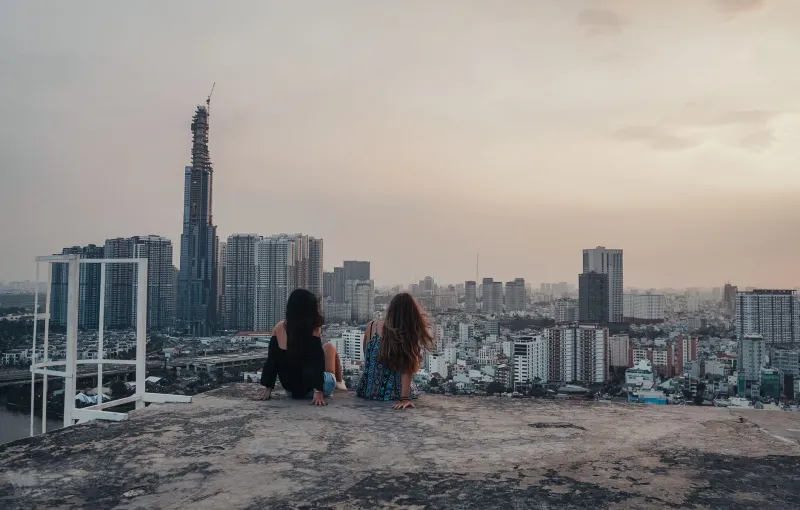
The Caravelle today is a five-star luxury hotel with a rooftop bar called Saigon Saigon. It's genuinely excellent. But stand up there at dusk and look out at the skyline — now crowded with glass towers and cranes — and it's not hard to feel the weight of what happened from this exact spot.
The Rex: Power Lunches, Propaganda, and the Five O'Clock Follies
If the Continental was for novelists and the Caravelle for journalists, the Rex Hotel was for the military-industrial complex in its most theatrical form.
The rooftop of the Rex hosted the daily U.S. military press briefings that reporters nicknamed "the Five O'Clock Follies" — a title that said everything about how seriously the press took the Pentagon's optimistic casualty counts and battle assessments. Journalists would sit through the briefings, scribble notes, and then walk back to the Caravelle to write the actual story. The gap between what was said at the Rex and what was happening on the ground became one of the defining credibility crises of the American war effort.
The Rex is still operating on Nguyễn Huệ Boulevard, right in the heart of what is now a gleaming pedestrian promenade. The rooftop bar remains open and offers one of the better views in District 1. Sipping a cocktail up there while Saigon hums below you, it's worth remembering that this exact spot was once the stage for some of the most aggressively managed — and least believed — press briefings in American military history.
The Majestic: Old Money, Old Ghosts
Built in 1925 on the banks of the Saigon River, the Majestic is the quietest of the city's legendary hotels, which is partly why it's the most atmospheric. French colonials favored it. So did the opium traders and merchants who moved through Saigon in the early 20th century with more money than anyone was supposed to notice.
During the war years, the Majestic attracted a different kind of guest — diplomats, intelligence officers, the occasional visiting dignitary who preferred a river view to the buzz of Đồng Khởi. It has a particular kind of faded grandeur that newer hotels can't manufacture: the kind that comes from actual time passing through a building.
The riverside terrace bar is still one of the best seats in the city, especially at night when the river traffic moves slow and the opposite bank glitters. It's a good place to think about how many deals were made in this exact spot, over how many decades, by people who thought they were shaping a city that had been shaping itself long before they arrived.
Why It Matters for American Travelers
There's a particular experience available in Saigon that you genuinely cannot replicate anywhere else in the world — the chance to physically inhabit the spaces where the American chapter of this city's story played out. Not in a museum, not through a glass case, but in a functioning bar where you can order a drink and sit with it.
The war is part of the story, but it's not the whole story. These hotels predate American involvement and have outlasted it. They've hosted French colonialists and Vietnamese revolutionaries, British novelists and network television anchors. They've survived bombing attempts, regime changes, and decades of neglect followed by careful restoration.
What they offer now is something rarer than luxury: context. A place to sleep that comes with actual weight behind it.
Saigon has no shortage of shiny new hotels. Glass towers are going up faster than anyone can count. But if you want a room that carries something — a view that has earned its view — the old addresses still deliver.
Book accordingly.