Saigon Was Always a Spy City. These Landmarks Prove It.
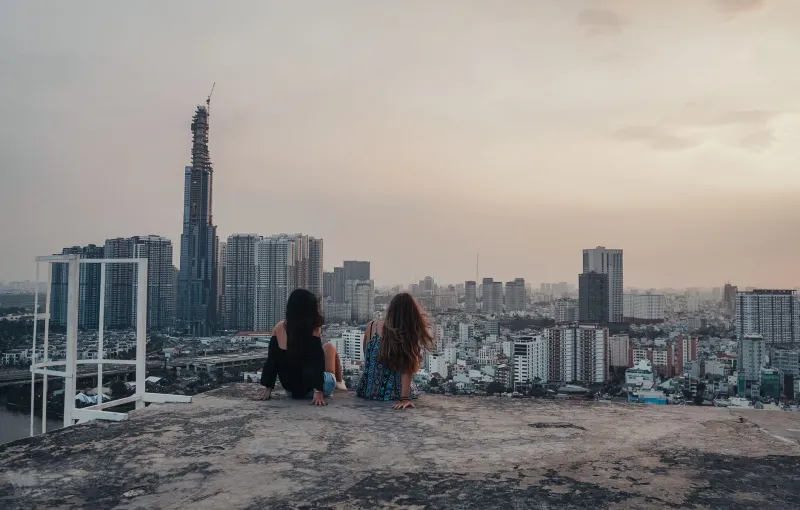
Most people who come to Ho Chi Minh City for the first time are chasing the war story. The tanks, the tunnels, the famous photograph. And look, that story is real and it matters. But there's a parallel narrative running underneath it — quieter, stranger, and honestly more cinematic — that almost nobody talks about on a tour bus.
Saigon was one of the great spy cities of the twentieth century. Not in a romantic, James Bond kind of way. In a dirty, paranoid, everybody-is-watching-everybody kind of way. During the height of the Cold War, the city was crawling with intelligence operatives from at least four countries, all of them running assets, burning contacts, and occasionally getting each other killed in places that today serve iced coffee and bánh mì.
You've already walked past the evidence. You just didn't know what you were looking at.
The Building That Watched the Fall
Start at the corner of Mạc Đĩnh Chi and Lê Duẩn, a quiet, tree-lined stretch in District 1 that feels more like a European side street than a city of nine million. The building you're looking for is the old Pittman Apartments — or what remains of the compound associated with it. During the war years, this address was among the worst-kept open secrets in Saigon: a CIA station operating under diplomatic cover, with a rooftop that intelligence officers used to monitor the city and, in the final hours of April 1975, to coordinate the helicopter evacuation that became one of the defining images of American defeat.
The famous photograph — a line of people climbing a narrow staircase to a rooftop — is often misidentified as the U.S. Embassy. It wasn't. It was here. Stand across the street and look up. The rooftop is still there. The staircase is still there. The city just grew up around it and moved on.
Hotel Rooms Where Deals Were Made and Blown
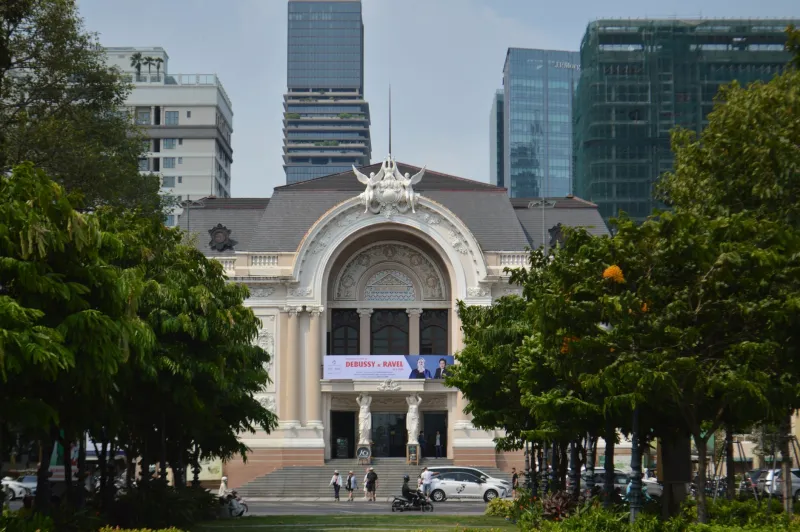
Walk south toward Đồng Khởi and you'll pass the Caravelle Hotel, which opened in 1959 and immediately became the most strategically located building in Southeast Asia. Journalists filled the lower floors. The upper floors, depending on who you ask and which declassified documents you've read, hosted surveillance equipment trained on the Presidential Palace across the way.
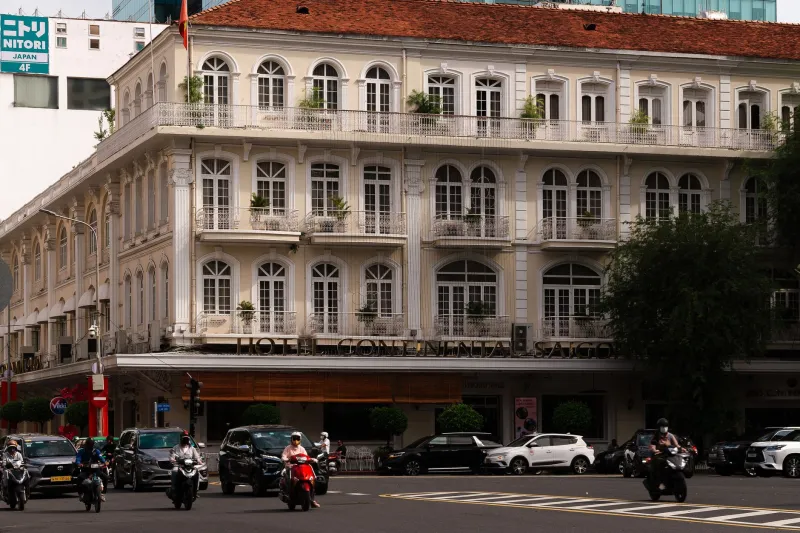
The Caravelle wasn't alone. The Continental Hotel, just next door, had been a French intelligence hub since the colonial era. Somerset Maugham stayed there. Graham Greene stayed there and turned what he observed into The Quiet American, a novel that reads less like fiction and more like a field report from someone who knew exactly what was happening in those rooms. The "Shelf" — the Continental's famous open-air terrace — was where reporters, spies, and diplomats mingled so freely that distinguishing one from another became a professional skill.
Today both hotels are beautifully restored and you can sit on that same terrace with a gin and tonic. The people around you are tourists. Seventy years ago, at least a third of them would have been something else entirely.
The Vietnamese Spies Nobody Taught You About
American intelligence operations in Saigon get most of the ink, but the Vietnamese side of this story is far more intricate — and far more devastating to the American effort.
Phạm Xuân Ẩn was, by any measure, one of the most remarkable intelligence officers of the twentieth century. He worked as a journalist for Time magazine, was trusted and genuinely liked by virtually every American reporter and official in the city, and was simultaneously a colonel in North Vietnamese intelligence, feeding strategic analysis back to Hanoi for years. He wasn't just gathering gossip. He was shaping how the North understood American intentions at the highest level.
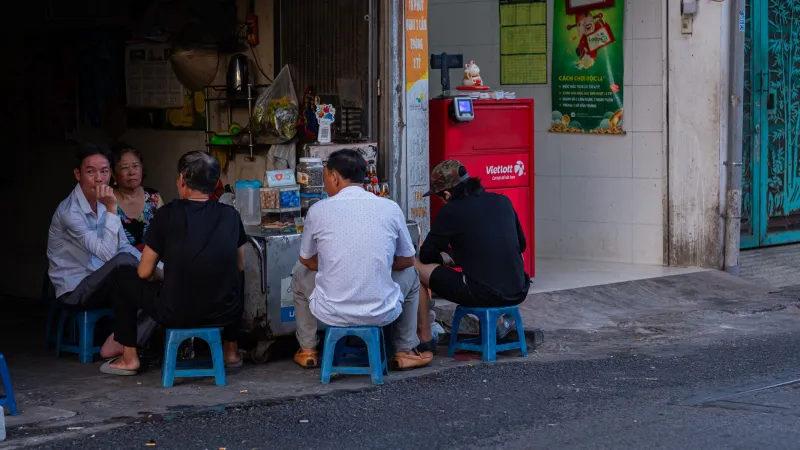
Ẩn lived openly in Saigon. He had an office. He had American friends who adored him. After reunification, when his cover was finally revealed, many of those former colleagues said they simply couldn't believe it — not because the evidence wasn't there, but because they'd never thought to look at a man they considered one of their own.
His former home in District 3 still stands. There's no plaque. There probably should be one.
The French Inheritance
Before the Americans arrived, the French ran this city's intelligence apparatus for nearly a century, and they left infrastructure that subsequent operators — American, Soviet, North Vietnamese — quietly inherited and repurposed.
The villa district around Tân Định, in District 1's northern pocket, is full of French-era buildings that served as safe houses, communication nodes, and meeting points during the First Indochina War. The Deuxième Bureau, France's military intelligence arm, operated extensively throughout this neighborhood. Some of those villas later became South Vietnamese government offices. Others became private residences. A few, according to historians who've traced the paper trail, ended up in the hands of people with interesting connections to Hanoi.
Walk through Tân Định on a weekend morning when the market is running and the pink church is full and it feels like the most peaceful place in the city. Which is, of course, exactly what a good safe house is supposed to feel like.
Cu Chi: Not Just Tunnels, But an Intelligence Network
Every tourist goes to the Củ Chi Tunnels. Almost nobody thinks about them as a command-and-control infrastructure rather than just a military one. The tunnel network wasn't only about moving troops and storing weapons — it was about maintaining secure communications, running courier networks, and keeping Hanoi's intelligence picture of Saigon updated in real time.
The people moving through those tunnels weren't just soldiers. They were couriers carrying intercepted documents, agents rotating in and out of deep cover positions inside the city, and analysts whose job was to read the American military's behavior and predict its next move. The tunnels were, in part, a spy network's nervous system.
Stand at the tunnel entrance at Củ Chi and try to hold both ideas at once: the military story you already know, and the intelligence story running alongside it. The city above those tunnels — the one those operatives were watching — is the same city you're visiting right now.
How to Actually Do This Walk
You can string most of these locations together in a half-day on foot if you start at the Pittman Apartments site and work your way south through District 1 before heading up to Tân Định. The Caravelle and Continental are obvious stops, and both have bars worth sitting in for a while.
For the Phạm Xuân Ẩn angle specifically, Larry Berman's biography Perfect Spy is worth reading before you come — or on the plane over. It'll change how you look at every Vietnamese face in a café that's a little too conveniently located near something important.
Saigon has always rewarded the people who look twice. The war story is on the surface. The spy story is in the walls.