One Street, Four Lives: The Astonishing Reinventions of Đồng Khởi
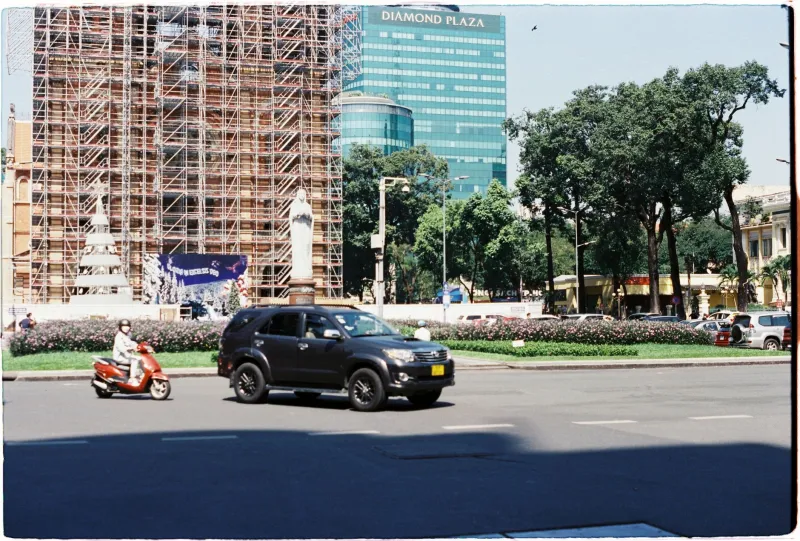
There's a particular kind of vertigo you feel standing on Đồng Khởi Street on a Tuesday afternoon. A woman in a silk áo dài glides past a Louis Vuitton window display. A cyclo driver naps in the shade of a colonial arcade that was already old when Graham Greene was drinking whiskey inside it. Two tourists pose for a selfie in front of a building whose walls have absorbed more history than most American cities will ever produce. The whole street hums with the specific frequency of a place that has been, in its lifetime, about four completely different things — and somehow never stopped being all of them at once.
 Photo: Đồng Khởi Street, via img.freepik.com
This is Đồng Khởi. And if you only walk one street in Saigon, it should probably be this one.
When It Was Rue Catinat: The French Chapter
The French named it after a warship — the Catinat — which is exactly the kind of colonial flex you'd expect from a government that was busy turning a river trading post into the so-called "Pearl of the Far East." By the late 19th century, Rue Catinat was the spine of French Saigon, lined with tamarind trees, sidewalk cafes, and the kind of European architecture that the colonizers used to remind everyone who was nominally in charge.
The Continental Hotel opened in 1880. The Caravelle followed decades later. The Notre-Dame Cathedral anchored one end of the street's wider neighborhood. Saigon's French quarter was designed to feel, at least to its administrators, like a transplanted slice of Paris — complete with wide boulevards, ornate facades, and a studied indifference to the fact that it was built on someone else's land.
 Photo: Continental Hotel, via cdn.continental.com
But even then, Rue Catinat was never purely French. Vietnamese merchants, Chinese traders, and a cosmopolitan mix of Southeast Asian residents moved through it daily. The colonial postcard version of the street was always a fiction maintained by selective vision. The real Rue Catinat was already hybrid, already layered, already more complicated than the people running it wanted to admit.
The War Years: Spies, Journalists, and the Continental Shelf
If you've read The Quiet American, you already have a version of this street living in your head. Graham Greene wrote much of that novel while staying at the Continental Hotel, and the street he described — full of operatives nursing drinks, journalists filing dispatches, and a city bracing for violence it couldn't quite name — was entirely real.
During the American war years, Đồng Khởi (still called Rue Catinat by many locals out of habit) became one of the most information-dense streets on the planet. The Caravelle Hotel housed the press corps. The Continental's open-air terrace — nicknamed the "Continental Shelf" by the correspondents who practically lived there — was where reporters from the AP, the New York Times, and CBS traded rumors, sources, and occasionally accurate intelligence about what was actually happening in the countryside.
It was also, depending on who you ask, a street full of CIA contacts, South Vietnamese government informants, and the occasional North Vietnamese intelligence operative hiding in plain sight. Everyone was watching everyone. The drinks were cold, the air was thick, and the stakes were as high as they've ever been on any single city block in American military history.
For American visitors today, this history lands differently than it does in a textbook. Standing in front of the Continental, knowing that the journalists who shaped your country's understanding of a catastrophic war once sat exactly where you're standing — that's not a museum experience. That's something older and stranger.
The Name Change and What It Meant
After reunification in 1975, the new government renamed the street Đồng Khởi — meaning "General Uprising" — in reference to the 1960 uprising against the Diem government in the Mekong Delta. It was a deliberate act of ideological rebranding, stripping the colonial name and replacing it with one that pointed toward revolutionary legitimacy.
The street itself went quieter in those years. The luxury hotels were nationalized. The foreign press left. The sidewalk cafes that had served as informal intelligence hubs became something more subdued. For a stretch of time, one of the most storied streets in Southeast Asia was just a street — functional, faded, and waiting.
Long-term residents who lived through that period describe a strange calm. The architecture remained, the bones of the French city still visible, but the energy had shifted entirely. It's a version of Đồng Khởi that almost no Western visitor ever saw, which makes it feel like a missing chapter — a quiet interlude between two loud eras.
The Renovation Era: Luxury Moves In
Đổi Mới — Vietnam's late-1980s economic reform package — eventually found its way to Đồng Khởi in the form of renovation budgets and foreign investment. The Caravelle expanded. The Continental was restored. International brands began signing leases on ground-floor retail spaces, and by the 2000s, the street was transforming again, this time into something that looked a lot like a luxury shopping corridor in any globally connected city.
Today, Đồng Khởi hosts Cartier, Hermès, and Chanel alongside Vietnamese designer boutiques, art galleries, and some of the best rooftop bars in the city. The sidewalks are clean. The facades are lit beautifully at night. If you arrived here with no context, you might mistake it for a very atmospheric upscale shopping district in any prosperous Asian city.
But context is everything on this street.
How to Read the Street Like a Local
The trick to Đồng Khởi — the thing that separates a meaningful visit from a nice stroll — is learning to look at what's behind the current surface. The Continental Hotel's ground-floor café still serves as a kind of living room for older Saigonese who remember the street from multiple eras. Sit there long enough and you'll hear conversations in French, Vietnamese, and English happening within earshot of each other, which has probably been true for 140 years.
The Caravelle's rooftop bar, Saigon Saigon, offers a view that war correspondents would have killed for. Order something and watch the city spread out below you — the river in one direction, the new towers of District 1 in another, and the colonial-era streets threading between them like the city's original grammar.
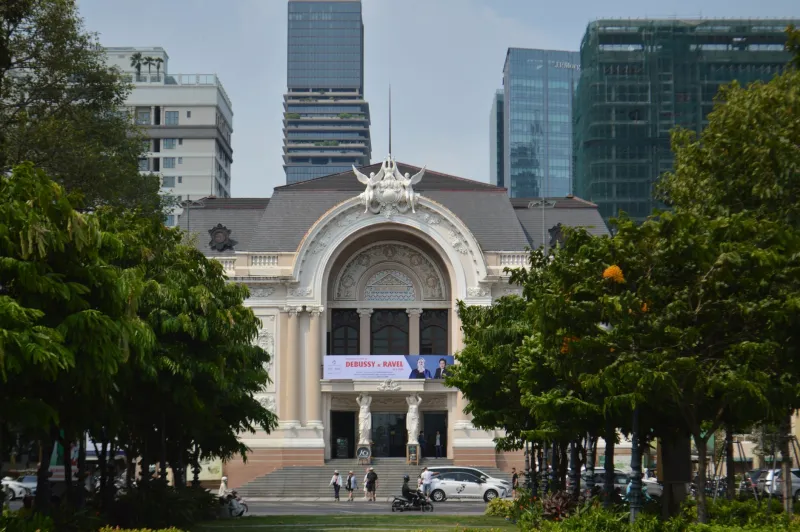
And then walk north toward the Municipal Theater, Saigon's ornate opera house, which was built by the French in 1900, used as the South Vietnamese parliament during the war, and is now once again a performance venue. It has been, in other words, almost everything a building can be.
 Photo: Municipal Theater, via dl-asset.cyberlink.com
Why This Street Matters to American Visitors Specifically
American tourists come to Saigon for a lot of reasons — the food, the energy, the cost of a really good meal. But Đồng Khởi offers something that's harder to find: a place where American history is embedded in the physical landscape in ways that are direct, specific, and impossible to sanitize.
The journalists who drank on the Continental Shelf were shaping American public opinion in real time. The intelligence operatives who moved through these blocks were making decisions that affected American lives and Vietnamese lives in equal measure. The buildings are still here. The street is still here. The city rebuilt itself around all of it and kept going.
That's not a guilt trip — it's an invitation. Đồng Khởi is proof that cities are more resilient than the forces that try to define them, and that history doesn't disappear just because a new sign goes up or a luxury brand moves in. Walk this street with your eyes open, and you'll understand Saigon in a way that no tour bus can give you.
The ghosts are still here. They're just dressed better now.