Every Cup Tells a War Story: Drinking Your Way Through Saigon's Coffee History
Every Cup Tells a War Story: Drinking Your Way Through Saigon's Coffee History
Somewhere between the first sip of a cà phê sữa đá and the moment the sweetened condensed milk ribbons down through the ice, something clicks. This isn't just a good drink. It's a document.
Saigon runs on coffee the way New York runs on ambition — loudly, constantly, and with an almost aggressive sense of identity. But unlike the oat-milk cortado you grabbed on your way to a meeting back home, a cup of Vietnamese coffee carries about 150 years of political baggage, cultural reinvention, and sheer human stubbornness. Understanding that history doesn't just make the coffee taste better. It makes the whole city make more sense.
The French Left, But the Beans Stayed
It starts, like so many things in Vietnam, with the French. Catholic missionaries introduced coffee plants to the country in the 1850s, and colonial administrators quickly saw the commercial potential. By the early 20th century, the Central Highlands — particularly the region around Buôn Ma Thuột — had become one of the most productive coffee-growing zones in Southeast Asia. The French built the plantations. Vietnamese laborers worked them, often under brutal conditions.
 Photo: Buôn Ma Thuột, via windowsreport.com
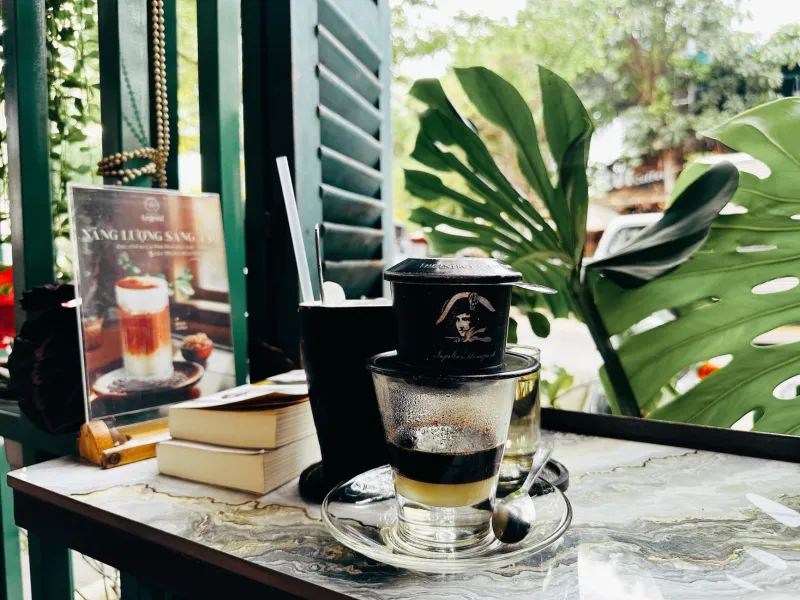
Here's the twist: when the French eventually left, the Vietnamese kept the coffee. Not just as a crop, but as a ritual. The slow drip of the phin filter — that small metal contraption that still sits on top of nearly every glass in Saigon — became a symbol of patience, adaptation, and quiet ownership. We took your bean, the culture seemed to say, and we made it ours.
The phin itself is worth a moment of appreciation. It brews coffee at a pace that feels almost confrontational by American standards — four to six minutes for a single cup. In a city that moves as fast as Saigon, the phin is a daily act of deliberate slowness. Locals don't drink coffee to get somewhere. They drink it to sit still for a minute before the city swallows them whole.
Egg Coffee and the Art of Making Do
If the phin filter represents resilience, egg coffee — cà phê trứng — represents full-on creativity born from scarcity.
The origin story traces back to Hanoi in the 1940s, when milk was so scarce that a bartender named Nguyễn Văn Giang started whipping egg yolks with sugar and a splash of coffee as a substitute. The result was something between a dessert and a dream — thick, custardy foam over a dark espresso base. It became a Hanoi institution.
After 1975, waves of northerners resettled in Saigon, and they brought cà phê trứng with them. Today you can find it all over Ho Chi Minh City, but its presence here carries that specific weight of displacement and adaptation that defines so much of Saigon's food culture. Every bowl of northern-style pho in District 1, every egg coffee on a plastic stool in Bình Thạnh — these are foods that traveled south in someone's memory.
For the best version in the city, head to Giảng Café on Nguyễn Thiện Thuật in District 3. It's a branch of the original Hanoi institution, and they serve the egg coffee warm in a small ceramic cup nestled inside a bowl of hot water to keep the temperature steady. Order it, wrap both hands around it, and take your time.
 Photo: Giảng Café, via i.pinimg.com
The Legendary Spots That Built the Scene
Café Apartment on Nguyễn Huệ is the obvious starting point for any first-timer — a nine-story residential building from the 1960s that's been colonized floor by floor with independent cafés. It's photogenic to the point of absurdity, and yes, every travel blogger you follow has been there. Go anyway. The building itself is a piece of Saigon history, and wandering its narrow staircases gives you a real sense of the layered, improvised energy that defines the city's commercial life.
For something older and quieter, Café Sứ in District 1 operates out of a French-era villa with ceiling fans, worn tile floors, and a menu that hasn't needed to update itself in decades. The cà phê đen đá — black iced coffee — here is the standard against which everything else should be measured. Strong, slightly bitter, cut with just enough ice to keep it from overwhelming you.
Trung Nguyên Legend Café near the Reunification Palace is worth a stop not just for the coffee but for the context. Trung Nguyên is Vietnam's most famous domestic coffee brand, and their flagship café treats Vietnamese coffee with the kind of reverence an American might reserve for a Napa Valley tasting room. Multiple single-origin options, a glossy menu explaining processing methods — it's a bit theatrical, but it's also genuinely educational.
Third Wave, Saigon Style
The newer generation of Saigon coffee shops has absorbed all of this history and is doing something interesting with it. Places like The Workshop in District 1 and Shin Coffee in the Thảo Điền neighborhood of District 2 look like they could be in Portland or Austin — exposed brick, pour-overs, single-origin beans from the Central Highlands, baristas who can talk about fermentation like sommeliers talk about terroir.
But spend enough time in these places and you realize they're not copying the Western third-wave model. They're completing a circle. The beans are Vietnamese. The attention to craft honors the same Central Highlands farms that French colonizers built and Vietnamese farmers eventually reclaimed. The slow, deliberate approach to brewing is just the phin filter in a new outfit.
How to Actually Do This
If you're planning a coffee-focused half-day in Saigon, here's a loose route worth considering. Start early — before 8 a.m. — at a sidewalk stall in District 1 for a classic cà phê sữa đá and about forty-five minutes of watching the city negotiate its morning commute. Then make your way to Café Sứ for a second, slower cup in a quieter setting. Midmorning, walk to Giảng for the egg coffee. By noon, you'll have had three cups, two neighborhoods, and a working understanding of about a century of Vietnamese history.
That's the thing about coffee in Saigon. It's not a beverage category. It's a curriculum. Every variation on the menu — the coconut coffee at Cộng Cà Phê, the salted cream cold brew at a dozen third-wave spots, the ancient black drip at a corner stall that's been there since before you were born — is a chapter in a story the city keeps writing about itself.
You don't have to know all the history to enjoy the coffee. But once you know some of it, you'll never drink it the same way again.