Gone Without a Goodbye: The Saigon Landmarks That Were Erased Before Anyone Could Mourn Them
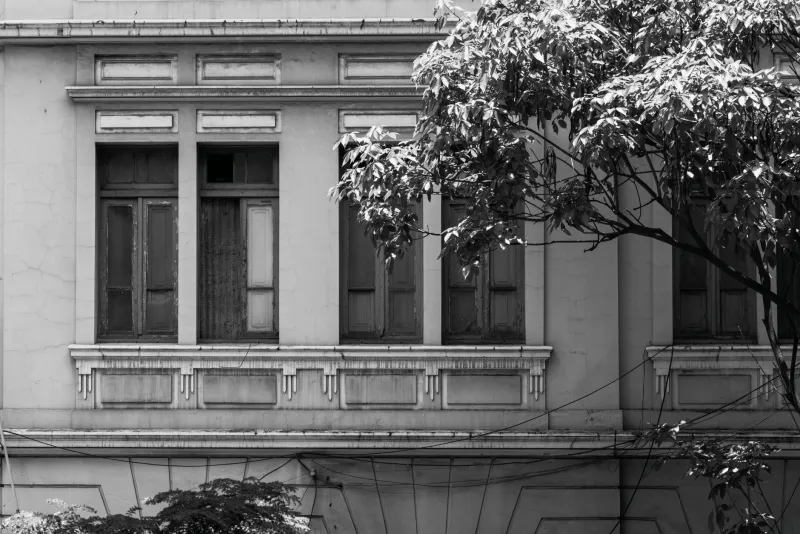
There's a particular kind of grief that hits you when you realize the thing you're looking for isn't just closed — it's gone. Not relocated, not renovated. Gone. Scraped off the map, replaced by a parking structure or a glass tower or, worse, a vacant lot that nobody's gotten around to filling yet.
Saigon is full of those absences. Walk the right streets, talk to the right people, and the city starts to feel like a palimpsest — layer after layer of erased text, with only faint impressions left behind. For a place so obsessed with momentum, Ho Chi Minh City has a complicated relationship with what it leaves in the rubble.
These aren't just buildings. They were meeting places, memory holders, and — in some cases — political statements made of brick and mortar. Here are ten that vanished before anyone thought to save them, and why that still matters.
1. The Cercle Sportif: Where the Colonial Elite Played While the City Burned
If you want to understand the psychological architecture of French Saigon, you start here. The Cercle Sportif was a sprawling colonial sports club on Nguyen Thi Minh Khai Street — tennis courts, a swimming pool, manicured lawns — where French administrators and their Vietnamese collaborators performed leisure as a form of power. After reunification, it was repurposed into a workers' cultural center, which felt like poetic justice. Today, the site has been absorbed into a modern complex, its original character largely unrecognizable. Preservationists say the bones are still there if you look hard enough. Most visitors never look.
2. The Eden Building: Saigon's First Taste of Modern Cool
Before the city had shopping malls, it had the Eden Building on Đồng Khởi — a multilevel arcade of boutiques, a cinema, a rooftop café, and the kind of electric social energy that made it the unofficial living room of mid-century Saigon. Journalists, intellectuals, and off-duty diplomats all passed through. The building survived the war but not the peace. It was demolished in the 1990s to make way for Union Square, a luxury retail complex that, ironically, now hosts many of the same international brands that could be found in any American mall. The trade felt lopsided.
3. The Đô Thành Cinema: Where Saigon Went to Dream
Saigon once had a remarkable cinema culture — dozens of theaters showing French films, American westerns, Hong Kong martial arts epics, and locally produced Vietnamese dramas. The Đô Thành was among the grandest. Its façade was a minor masterpiece of mid-century tropical modernism, and its interior could seat hundreds. It was demolished in the early 2000s. A handful of the city's old cinema palaces survive in various states of disrepair, but the Đô Thành isn't one of them. Longtime residents who grew up sneaking in to see double features still talk about it the way Americans talk about drive-ins — with the specific tenderness reserved for things that defined a generation and then quietly ceased to exist.
4. The Arc en Ciel Hotel, Cholon: The Underworld's Favorite Address
Deep in Cholon, Saigon's Chinatown, the Arc en Ciel was the kind of establishment that appeared in spy novels because it actually belonged in one. The hotel hosted secret meetings, black-market dealings, and the kind of back-channel diplomacy that never made it into official records. Graham Greene is said to have known the place. Its layered history — Chinese merchant culture, French colonial influence, wartime intrigue — made it irreplaceable as a document of how Saigon's shadow economy actually functioned. It was torn down to make room for a modern hotel that has no stories worth telling.
5. The Old Saigon Central Post Office Annex Buildings
Everyone knows the main post office — that gorgeous Gustave Eiffel–adjacent cathedral of communication that still anchors the tourist circuit near Notre-Dame Cathedral. What most visitors don't know is that it was once surrounded by a cluster of auxiliary colonial structures that gave the entire block a coherent architectural identity. Those annex buildings are gone, replaced piecemeal over the decades. The main post office now stands slightly marooned, its grandeur intact but its context stripped away. It's a little like saving one wall of the Sistine Chapel and calling it preservation.
6. The Tân Định Market's Original Structure
Saigon's markets are its circulatory system, and Tân Định has been pumping life through District 3 for well over a century. But the original market structure — a French-built iron-and-masonry hall with a distinctive roofline — was replaced in the 1950s with a more utilitarian building. Vendors who worked in both versions describe the original as having a quality of light that made even ordinary commerce feel theatrical. Functional upgrades are understandable. But something gets lost in translation every time beauty is traded for efficiency.
7. The Brinks Hotel: America's Saigon Headquarters, Then Nothing
American readers with any knowledge of the Vietnam War era will recognize the Brinks. The hotel on Hai Ba Trung Street served as a U.S. officers' billet and was bombed by the Viet Cong in 1964 in one of the war's most audacious urban attacks. After the war, the building lingered in various states of use and neglect before being demolished to make way for a modern hotel. The new structure on the site — the Park Hyatt Saigon — is beautiful and historically aware in its own way, but the Brinks itself, with all its layered American guilt and wartime memory, is simply gone. No plaque, no acknowledgment, no ghost.
8. The French Governor-General's Auxiliary Villas
The main Governor-General's Palace survives as the Reunification Palace — one of Saigon's most visited landmarks and a genuine architectural artifact of Cold War-era modernism. But the network of secondary colonial villas that once surrounded and supported it? Cleared, mostly in the decades following reunification, to make way for government offices and expanded grounds. Historians argue that the villas were as important as the palace itself — they housed advisors, visiting dignitaries, and the administrative machinery of empire. Without them, the story is incomplete.
9. The Sporting Club Rowing Pavilion on the Saigon River
For a city built on water, Saigon has done a remarkable job of turning its back on the river. The old rowing pavilion — a colonial-era structure that once hosted regattas and waterfront social events — was one of several riverfront landmarks that disappeared as the embankment was developed for commerce and, later, for the gleaming promenade that now attracts evening joggers and tourist selfies. The new riverfront is genuinely pleasant. But the specific character of a colonial river culture — messy, stratified, alive — is nowhere to be found.
10. The Rex Hotel's Original Rooftop Terrace Configuration
The Rex itself still stands, still grand, still serving its legendary rooftop cocktails to tourists who've read about it in war memoirs. But the original configuration of that rooftop — the one where American military officials held nightly press briefings so absurdly optimistic they became known as the "Five O'Clock Follies" — was significantly altered during a renovation in the 1980s. The physical space where that dark theater of misinformation played out no longer exists in its original form. For a city that carries so much American historical weight, that feels like a loss worth noting.
What Gets Lost When a City Forgets on Purpose
Saigon's preservationists — and there are more of them now than there were twenty years ago — will tell you that the problem isn't malice. It's momentum. A city growing this fast, pulling this many people out of poverty, building this much infrastructure, doesn't always have the luxury of stopping to assess what it's bulldozing. And in a place where the past is politically complicated, forgetting can feel like a survival strategy.
But for visitors trying to understand Saigon as a living document of history — colonial, wartime, postwar, and whatever comes next — these absences are part of the story too. The gaps in the skyline are as revealing as the buildings still standing. What a city chooses to demolish tells you almost as much as what it chooses to preserve.
So walk slowly. Ask the older vendors what used to stand where you're standing. Look at the lot that's been empty for fifteen years and wonder what it remembers. Saigon is generous with its history if you know how to ask for it.
The landmarks that are gone can't be saved. But the next wave of erasure is already being planned. That's the conversation worth having — and the reason it matters that you showed up to have it.