Dead Serious: How Saigon Keeps Its Ghosts Fed, Honored, and Dangerously Close
It starts with smoke.
You're walking down a perfectly ordinary Saigon side street — maybe near Bến Thành, maybe somewhere deep in District 3 — and suddenly there's a small fire at the curb. A woman crouches beside it, feeding paper bills and paper clothes into the flames. She doesn't look frightened. She looks like someone paying a bill. Because in a very real sense, that's exactly what she's doing.
Saigon has always had a complicated, intimate relationship with its dead. Not the horror-movie kind of complicated. Something older and stranger and, once you understand it, kind of profound. The city is layered with more than a century of war, displacement, and transformation. Millions of lives ended here — violently, quietly, too soon, too late. The Vietnamese concept of the afterlife doesn't park those souls somewhere far away. It keeps them close. Hungry. Present. Capable of blessing you or, if ignored long enough, making your life genuinely difficult.
For American tourists who grew up on Halloween haunted houses and jump-scare horror films, Saigon's supernatural landscape is a serious recalibration.
What You're Actually Looking At
Before you book a ghost tour, it helps to understand the framework. Vietnamese folk belief — shaped by Buddhism, Taoism, Confucian ancestor veneration, and older animist traditions — operates on the premise that the dead don't vanish. They transition. And where they end up, and how comfortable they are once they get there, depends heavily on the living.
A person who dies with unfinished business, or whose family fails to perform proper rituals, becomes a cô hồn — a wandering, hungry ghost. These aren't necessarily malevolent. They're more like the spiritually homeless. During the seventh lunar month (roughly August), the gates of the spirit world open and the wandering dead roam freely. Families set out elaborate offerings at their doorsteps: fruit, rice, paper money, even tiny paper iPhones. The goal isn't to appease something terrifying. It's just good manners.
This is the supernatural backdrop against which Saigon's ghost stories play out. And in a city with Saigon's history, there are a lot of stories.
The Hotels That Hold Their Breath
Century-old colonial guesthouses in Districts 1 and 3 are ground zero for the city's most persistent ghost lore. Locals who work in hospitality will talk about it, if you ask the right way — the room on the third floor that guests always check out of early, the hallway where the air conditioning inexplicably drops ten degrees, the elevator that opens on floors no one requested.
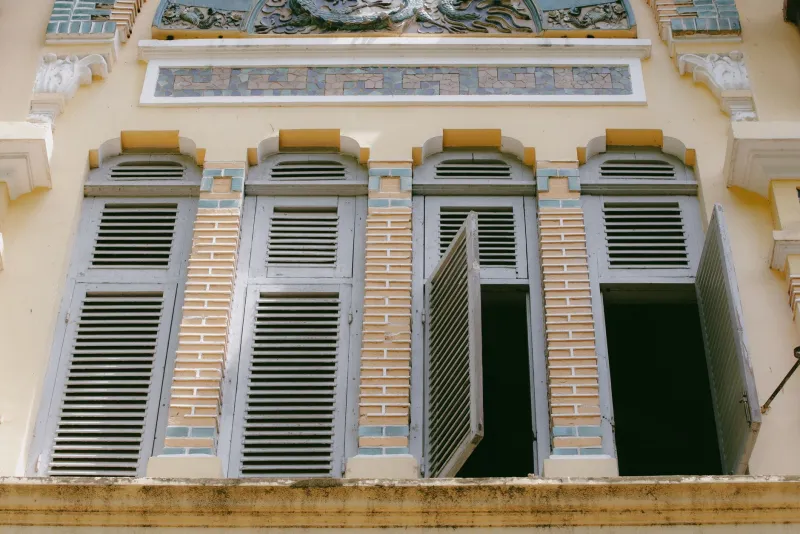
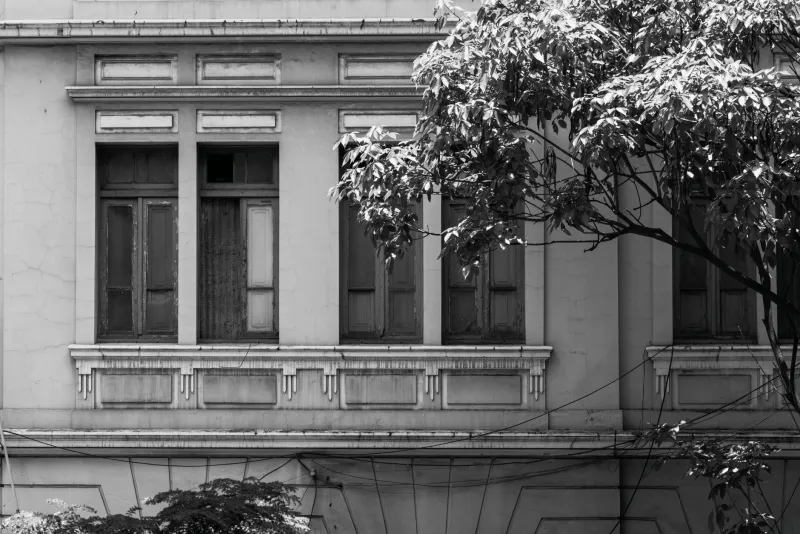
Staff at several of the city's older boutique properties — the kind converted from French-era villas with tiled courtyards and ceiling fans that wobble just a little too dramatically — will tell you quietly that they keep small altars near the service entrances. Not for tourists. For the building itself. For whoever might still be living in the walls.
One ghost tour guide, a sharp-witted woman in her thirties who has been running nighttime walking tours through District 1 for nearly a decade, puts it bluntly: "The buildings remember. They absorbed everything. The French, the Americans, the war, the reunification. You don't just paint over that."
Her tours don't involve actors in sheets. They involve standing outside specific addresses at midnight while she explains what happened there — the executions, the suicides, the desperate last nights — and letting the city's ambient noise do the rest. American visitors, she says, usually come in skeptical and leave quieter than they arrived.
Temples That Aren't Quite What They Look Like
Saigon's temples do double duty. The obvious function — worship, community gathering, spiritual practice — is the one tourists photograph. The less obvious function is the ongoing negotiation between the living and the dead that happens in nearly every corner of every shrine.
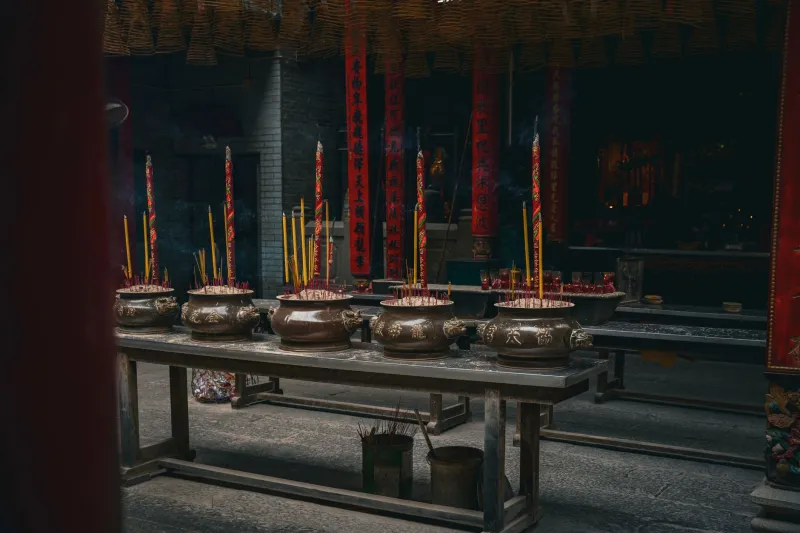
The altars inside Jade Emperor Pagoda in District 3 aren't just decorative. They're operational. People bring specific requests: help finding a missing relative, protection for a child about to take exams, mercy for a parent who died before the family could say goodbye. The smoke rising from the incense coils isn't atmosphere. It's a message delivery system.
In Cholon, Saigon's historic Chinatown, the temples carry an additional layer of complexity. The Chinese-Vietnamese community that built this neighborhood brought its own traditions of ghost appeasement and spirit veneration, and those traditions have been running continuously for generations. Some of the altars inside Thien Hau Temple — dedicated to the goddess of the sea — include offerings for souls lost during the dangerous boat crossings of the late 1970s. The grief is still fresh enough to feed.
The Back Alleys Have Opinions
Ask a xe ôm driver — one of the old-school motorbike taxi guys who has been navigating this city for thirty years — which streets he avoids after midnight. Most of them will answer without hesitation.
Saigon's hẻm (the narrow alleyways threading between main streets) are their own world after dark. During the day, they're charming: laundry overhead, kids on bikes, the smell of someone's dinner. After midnight, they get complicated. Locals will point you toward specific alleys in Districts 4 and 8 with the matter-of-fact certainty of people who have simply stopped arguing with the evidence.
These aren't necessarily sites of documented historical tragedy. Sometimes an alley just develops a reputation over decades of collective experience — too many strange sounds, too many dogs refusing to enter, too many people reporting the same specific feeling of being followed by something they couldn't see when they turned around. Saigon doesn't require a dramatic backstory to generate a haunting. Sometimes the city just accumulates.
What American Visitors Keep Getting Wrong
The most common mistake US tourists make when engaging with Saigon's supernatural culture is treating it as entertainment — a spooky add-on to the war history tour. The locals who maintain these beliefs and practices aren't performing folklore for visitors. They're doing something that functions, for them, the way going to church or visiting a grave functions for Americans: it's maintenance. It's love. It's the ongoing work of keeping relationships intact across whatever divide death creates.
When you watch a family burn paper offerings at a street corner, you're not watching superstition. You're watching someone take care of their people. When a hotel employee keeps an altar near the back stairwell, she's not being theatrical. She's being responsible.
Saigon will give you all the ghost stories you came for. The rattled American visitors who signed up for midnight walking tours and came back to their hotels wide-eyed and newly agnostic — they're real, and their experiences are valid. But the deeper travel experience here isn't fright. It's the gradual, disorienting realization that this city has constructed an entire architecture of care around its dead, and that architecture is everywhere once you know how to see it.
How to Actually Experience It
If you want to engage with this side of Saigon honestly, start at Jade Emperor Pagoda on a weekday morning, when it's less crowded and the rituals are unperformed for tourists. Wander Cholon after dinner and let yourself get genuinely lost around the temple district. Book one of the legitimate ghost walking tours through a reputable operator — the good ones are led by locals with actual cultural knowledge, not actors with flashlights.
And on any evening during the seventh lunar month, just walk slowly down a residential street around dusk. Watch what people put out at their doorsteps. Watch the small fires at the curbs. Watch the smoke rise.
The dead aren't hiding in Saigon. They're right there, being fed and remembered and argued with and loved. That's not a ghost story. That's just how this city works.