Last Call for History: The Legendary Bars Where Saigon Drank Through War, Peace, and Everything In Between
There's a particular kind of bar that exists only in cities with complicated pasts. Not the kind that hangs vintage signs for aesthetic effect. The kind where the walls actually remember — where the sticky wood of the counter absorbed conversations that shaped nations, where the ice long ago melted into drinks held by hands that were nervous, powerful, desperate, or all three at once. Saigon has more of these bars than almost any city on earth. And most of them are still open.
This isn't a listicle of rooftop bars with Instagram-friendly sunsets (though Saigon has those too, and they're great). This is something older and stranger — a tour through the drinking establishments that poured their way through coups, wars, regime changes, and economic miracles without ever quite closing the tab.
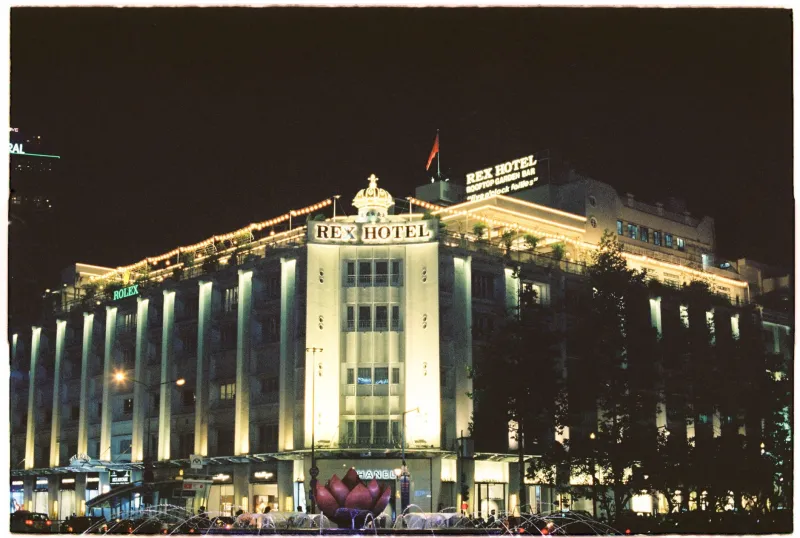
The Rex Hotel Rooftop: Cocktails Above the Fire
Start at the top, literally. The rooftop bar of the Rex Hotel on Nguyễn Huệ Boulevard is one of the most historically loaded drinking spots in Southeast Asia, full stop. During the American war years, this was the place where U.S. military brass and journalists gathered each evening for what correspondents grimly nicknamed the "Five O'Clock Follies" — the daily military briefings that, more often than not, painted a rosier picture of the conflict than the one playing out in the streets below.
American reporters would sit up here with their gin and tonics, listening to optimistic casualty reports, then file stories that told a very different truth. The bar became a kind of pressure valve — a place where the gap between the official narrative and the lived reality could be temporarily numbed with another round. If you visit today, the view hasn't changed much. The city below has exploded upward and outward, but sit at the right angle at dusk, and it's not hard to feel the ghost of that particular tension hanging in the tropical air.
Order something cold. Think about what it meant to drink up here while a war happened down there. Then order another.
Apocalypse Now: The Bar That Refused to Be Renamed
Tucked into a side street off Lê Thánh Tôn, Apocalypse Now has been a fixture of Saigon's nightlife landscape since the early 1990s — which, in this city's terms, practically makes it ancient. The name alone is a provocation, a wink at the Coppola film that took its title from Joseph Conrad and turned Vietnam into a symbol of American moral unraveling. Naming a bar after it in the actual city where that unraveling happened is either deeply cynical or deeply honest, depending on your mood.
What's remarkable about Apocalypse Now isn't the décor or the drink list — it's the clientele archaeology. Over the decades, this place has hosted returning Vietnam veterans on emotional pilgrimages, backpackers on gap years, expats who arrived for six months and stayed for twenty years, and Vietnamese locals who couldn't care less about the name's cultural baggage and just want to dance. That layering of people, each bringing their own relationship to the city's history, gives the bar a strange, genuine energy that newer venues can't manufacture.
It's loud, it's sweaty, it's not trying to be anything other than what it is. In Saigon, that counts for a lot.
The Quiet Ones: Bùi Viện's Dives That Predate the Party Street
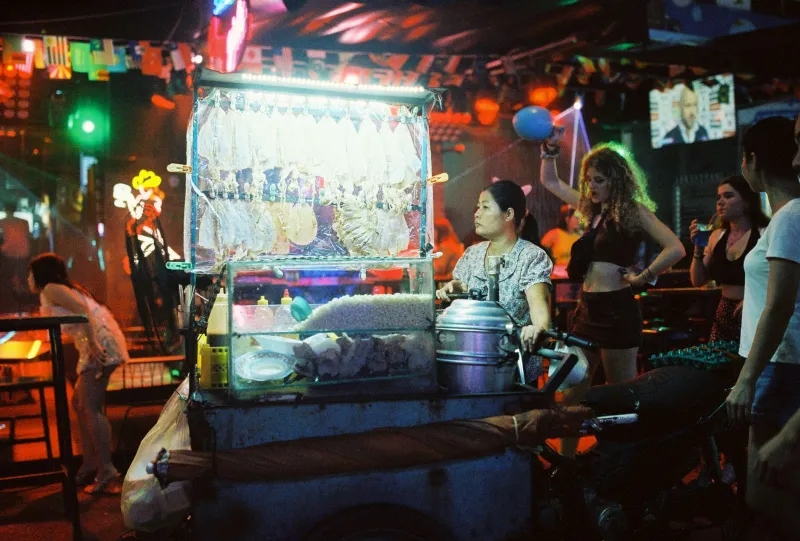
Everyone knows Bùi Viện as Saigon's neon-drenched backpacker strip, a wall-to-wall procession of beer buckets and bass-heavy speakers that stretches into the small hours. But tucked behind and between the tourist-facing facades are older, quieter establishments that predate the street's transformation into party central by decades.
These are the dives that served the neighborhood when it was just a neighborhood — small plastic-stool joints where local workers drank bia hơi (fresh draft beer, brewed daily and consumed fast) and where the conversation mattered more than the atmosphere. Several of them are still there, operating in something close to defiance of the surrounding spectacle. You'll recognize them by what they don't have: no English-language menu on a chalkboard, no bucket cocktail specials, no DJ booth.
The regulars at these places have watched Bùi Viện transform from the outside, like locals watching a film set being built around their actual house. Sitting down at one of these spots with a cold bottle of 333 and attempting even basic Vietnamese small talk will get you further into the real Saigon than any organized bar crawl ever could.
Brodard and the Ghost of the Continental Shelf
The Continental Hotel's terrace bar — known historically as the "Continental Shelf" among the foreign press corps of the war era — deserves its own chapter in any honest account of Saigon's drinking history. Graham Greene drank here while researching The Quiet American. Journalists, diplomats, spies, and fixers made it their neutral ground, a place where the fiction of normalcy could be maintained over aperitifs while the city did whatever the city was going to do regardless.
The hotel still stands on Đồng Khởi, and the terrace still operates, though the clientele has shifted considerably. Nearby, Brodard Café — another institution with roots deep in the French colonial period — has served as a kind of civilian counterpart to the Continental's more charged atmosphere: a place for pastries, coffee, and the kind of low-stakes gossip that lubricates city life in any era.
What strikes you about both spots is how ordinary they feel when you're sitting in them. That's the trick Saigon pulls constantly. The most historically saturated places often look the most unremarkable. The past doesn't announce itself here. It just sits down next to you and orders a drink.
Why These Places Still Matter
American tourists tend to arrive in Saigon carrying one of two mental images: the war footage they've seen in documentaries, or the gleaming economic-miracle skyline they've seen in travel magazines. The city's legendary bars complicate both pictures in useful ways.
They're evidence that Saigon has always been a city where people showed up from somewhere else, needed a drink, and ended up staying longer than planned. They're proof that history doesn't happen in museums — it happens in the pauses between conversations, in the rounds bought for strangers, in the bars that somehow keep their doors open through everything.
Next time you're here, skip at least one rooftop happy hour with a curated cocktail menu. Find one of these places instead. Sit down. Order whatever they're serving. Let the walls do the talking.
Last call in Saigon sounds different than it does anywhere else. It always has.