Sign Language: The Hand-Lettering Artists Who Refuse to Let Saigon's Streets Go Generic

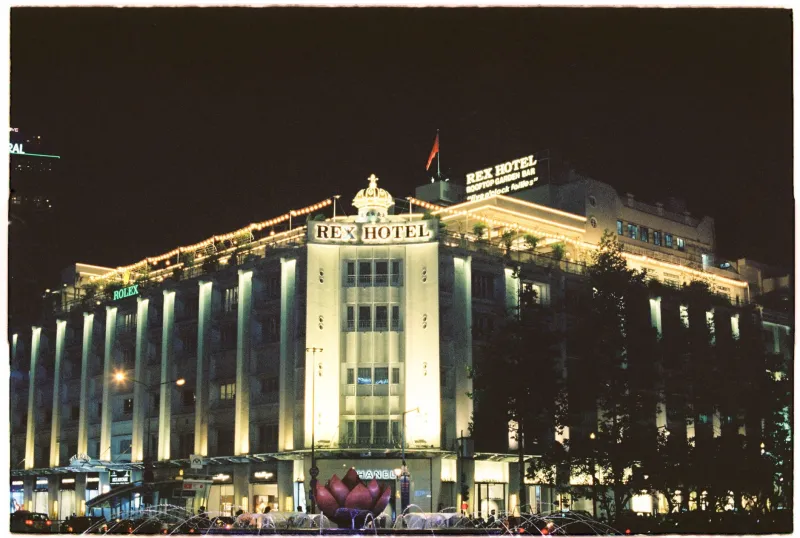
Photo: Dietmar Rabich, CC BY-SA 4.0, via Wikimedia Commons
Walk down the right street in Saigon on the right morning and you might catch someone doing something that looks, at first glance, like it belongs in a different century. A man crouched on a low stool, brush in hand, painting letters directly onto a shop shutter. The strokes are confident, unhurried, and slightly theatrical — each character landing with the authority of something that has been practiced ten thousand times.
This is not a heritage performance. This is Tuesday.
Saigon has a living, breathing, occasionally argumentative community of hand-lettering artists and typographers who are doing something quietly radical: refusing to let the city's visual language go flat. In a place where digital signage is cheaper, faster, and increasingly everywhere, these artists are making the case — with brushes and ink and hand-mixed paint — that letters are not just functional. They're cultural objects. And when they disappear from the streets, something irreplaceable goes with them.
The Typography That Built a City's Face
To understand what's at stake, you need to understand what Vietnamese typography actually is — and why it's more complicated, and more beautiful, than most outsiders realize.
Vietnamese is written in a Latin-based alphabet, but that description sells it dramatically short. The language uses an elaborate system of diacritical marks — dots, hooks, tildes, circumflexes, and combinations thereof — that stack above and below base letters to indicate tones and vowel sounds. A single letter can carry multiple marks. A single word can be a small vertical architecture of meaning.
For a hand-letterer, this is both a technical challenge and a creative opportunity. The spacing, weight, and placement of those marks isn't just functional — it's expressive. A skilled calligrapher can make the same word feel urgent or ceremonial, playful or solemn, depending on how the marks are handled. It's a dimension of typography that Latin-script designers simply don't deal with, and it's one reason why Vietnamese hand-lettering has developed its own distinct aesthetic logic over centuries.
During the French colonial period, that tradition absorbed Western influences — particularly Art Nouveau letterforms that were fashionable in France during the late nineteenth and early twentieth centuries — and produced a hybrid visual style that is genuinely unique to this part of the world. The faded signage on Saigon's older shophouses, when it survives, is often a direct artifact of that fusion.
The Studios You Won't Find on Instagram
Minh, 52, runs his operation out of a shophouse in District 10 that he shares with three other small businesses. His portion of the space is maybe fifteen feet wide and smells of linseed oil and turpentine. The walls are covered with sample boards — alphabets in dozens of styles, color swatches, reference photographs of old Saigon storefronts that he's collected for decades.
He learned his trade from his father, who learned it from an uncle who had trained under a sign-painter during the French period. The lineage is long and the knowledge is specific. Minh can tell you, without hesitating, which neighborhoods in Saigon historically favored which lettering styles — the more ornate, gold-heavy work in Chợ Lớn's Chinese-Vietnamese commercial district, the cleaner, more French-influenced strokes in District 1's older commercial streets.
"Every neighborhood had its own visual personality," he says. "Now everything looks the same. Same fonts, same colors, same everything. It's like everyone decided to forget what they knew how to do."
His clients are a mix: traditional medicine shops that want signage consistent with their decades-old aesthetic, temples commissioning ceremonial banners and altar texts, the occasional restaurant owner who wants something that looks genuinely old rather than nostalgically fake. He also gets work from an unexpected direction — architects and interior designers working on boutique hotel projects who want hand-lettered elements that no template can replicate.
The American Connection
Here's something that would probably surprise Minh if he thought about it too hard: his work is being quietly discovered by designers in the United States.
The global hand-lettering revival of the past decade — driven partly by a reaction against the homogeneity of digital design — has created a genuine appetite among American designers and brand consultants for non-Western lettering traditions. Vietnamese typography, with its tonal complexity and its hybrid colonial history, has started appearing on mood boards in studios from Brooklyn to Portland. A few American designers have made pilgrimages to Saigon specifically to study the tradition, and several Vietnamese-American designers working in the US have begun incorporating hand-lettering techniques learned from practitioners like Minh into commercial projects.
Minh himself has no social media presence and doesn't particularly want one. But photographs of his work circulate in design communities online, shared by visitors who happened to find his studio and understood what they were looking at.
"I don't need the internet to know my work is good," he says, with a smile that isn't quite arrogance and isn't quite modesty. "I need people to keep asking for it."
Fighting the Landlord, Fighting the Algorithm
The structural threats to this community are real and familiar: rising rents in the neighborhoods where these studios have historically been concentrated, the relentless economics of digital alternatives, and the absence of institutional support from a government that has been inconsistent at best in its approach to intangible cultural heritage.
Several practitioners have lost their spaces in the last five years. One calligrapher who worked near Bình Tây market for thirty years was displaced when her landlord sold the building to a developer. She now works from her apartment, taking only the projects she can manage in limited space. Another hand-letterer in District 3 has started supplementing his income by teaching weekend workshops to Vietnamese college students — a pragmatic move that also happens to be one of the more effective forms of knowledge transfer available to him.
The workshop model is catching on. A loose network of practitioners has begun sharing studio space and teaching collectively, partly for economic efficiency and partly because there's safety in numbers when it comes to negotiating with landlords and making the case to local cultural institutions that what they do matters.
Where to Look, What to Bring
Finding these studios requires the same approach as finding anything genuinely good in Saigon: ask locals, wander deliberately, and resist the pull of the obvious.
District 5 and District 10 are the most productive hunting grounds. Traditional printing shops — the kind that still produce wedding invitations and ceremonial paper goods by hand — often have connections to calligraphers and sign-painters and can make introductions. Temple complexes, particularly those that commission new banners and altar texts regularly, are another entry point.
If you find a studio, don't just photograph and leave. Commission something small — a name card in Vietnamese calligraphy, a short phrase rendered in a style of the artist's choosing. The price will be modest, the object will be singular, and you'll be directly supporting a practice that no cultural heritage fund has gotten around to saving yet.
Saigon's streets are still talking, if you know how to read them. These are the people writing the words.