Popcorn, Propaganda, and the Projectionists Who Kept the Lights On
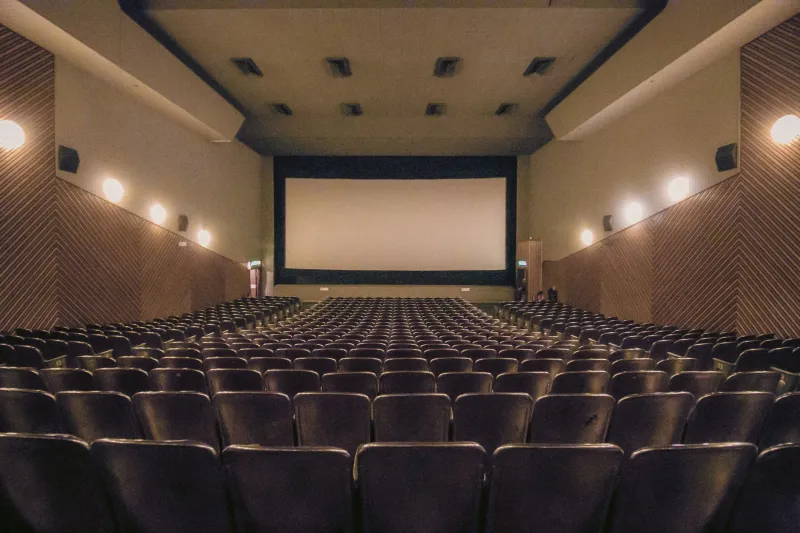
There's a moment, if you know where to look, when the old Saigon surfaces completely unannounced. You're walking through District 1, sweating through your shirt, dodging motorbikes, and then — there it is. A marquee that looks like it belongs in 1962 Los Angeles. Ornate concrete scrollwork above a set of double doors. A ticket window the size of a confessional booth. You stop. The city rushes past you. And for a second, the whole century compresses.
Saigon was once one of Southeast Asia's great cinema cities. That's not nostalgia talking — that's just the record. At its peak in the 1960s, the city supported more than a dozen first-run movie houses, ranging from grand colonial picture palaces to modest neighborhood theaters where the fans whirred overhead and the seats creaked like old boats. French colonists had built the circuit originally, importing Hollywood glamour alongside their own metropolitan culture. Then the Americans arrived, and the whole thing got stranger, louder, and considerably more complicated.
The Golden Age Nobody Talks About
The Rex. The Eden. The Casino. The Lido. The Majestic. These weren't just theaters — they were social infrastructure. In a city defined by political tension and daily uncertainty, the movies offered something almost radical: two hours of somewhere else.
For French colonists in the 1940s and '50s, Saigon's cinemas were a lifeline to Paris — a way of insisting, against mounting evidence, that the empire was still intact and the world still made sense in French. Vietnamese audiences, when they were admitted at all, sat in separate sections and watched the same films from a different angle, literally and otherwise. The irony of watching American westerns — stories about settlers claiming land that wasn't theirs — in a colonized city wasn't lost on everyone.
By the early 1960s, with South Vietnam nominally independent and American money flooding into the city, the cinema circuit exploded. Hollywood product dominated the marquees: war films, Westerns, melodramas, the occasional musical. GIs on R&R packed the air-conditioned houses in numbers that would have impressed a Times Square theater manager. Vietnamese families came too, watching dubbed or subtitled prints of films that depicted a version of American life — suburban, optimistic, improbably clean — that bore almost no relationship to what was happening outside the theater doors.
That gap between screen and street was, in retrospect, the whole story.
The Films They Weren't Supposed to Screen
Here's what the official histories leave out: Saigon's projectionists were quiet rebels.
After 1975, the new government moved swiftly to nationalize the cinema circuit and repurpose it as a vehicle for revolutionary culture. Soviet and Eastern Bloc films replaced Hollywood product. Propaganda reels ran before every feature. Attendance was sometimes less than voluntary. The old marquees got new names. The ticket windows stayed open, but what was on offer had changed completely.
Except — and this is where it gets interesting — not entirely. Several projectionists who had worked the old circuit stayed on under the new management. They knew the equipment. They knew the buildings. And some of them, quietly and at genuine personal risk, held onto prints of films that were now officially forbidden. American films. French films. Vietnamese films made before 1975 that depicted a Saigon the new government preferred to treat as if it had never existed.
These weren't large-scale operations. Nobody was running an underground Sundance. It was more modest than that — a reel passed between friends, a private screening in a back room, a print stored in a false-bottomed equipment case. But the impulse behind it was enormous: the refusal to let a city's cultural memory be edited out of existence.
What's Still Standing
The attrition has been brutal. The Eden complex — arguably the most beautiful entertainment venue Saigon ever produced, a sweeping Art Deco arcade that housed a cinema, shops, and a rooftop garden — is gone, demolished in the 1990s to make way for development that itself now looks dated. The Casino theater became a performing arts venue. Others became parking structures, shopping centers, or simply ceased to exist in any recognizable form.
But a few survivors remain, and they're worth your time.
The Đống Đa Cinema in District 3 still operates, improbably, as a working movie house. The building retains enough of its mid-century bones to make a film history nerd genuinely emotional. The programming is a mix of Vietnamese releases and the occasional international title, and the audience — families, teenagers, older couples who've been coming for decades — has a warmth you won't find in any multiplex.
The Rex Hotel's connection to cinema history runs deeper than most visitors realize. The rooftop bar, famous as the site of the American military's daily press briefings during the war — the ones journalists nicknamed the "Five O'Clock Follies" for their creative relationship with the truth — also hosted outdoor screenings during the hotel's earlier incarnations. Standing up there now, looking out over the intersection of Lê Lợi and Nguyễn Huệ, you're standing in a place where official narrative and lived reality collided publicly, repeatedly, and sometimes spectacularly.
The Tân Định neighborhood in District 3 has a small cinema that locals treat as something between a community center and a time capsule. It doesn't appear in most guidebooks. That's precisely why you should find it.
The People Keeping the Reels Turning
Talk to Minh, who has been projecting films at the same District 1 theater for thirty-one years, and he'll tell you the job is mostly technical now — digital systems have replaced the old 35mm equipment, and there's less to maintain, less to love. But ask him about the transition period, the years in the late '70s and '80s when the city was recalibrating itself culturally, and something shifts in his expression.
"People needed the movies," he says, in the careful way of someone who has learned to be precise about what he remembers. "It didn't matter what was playing. They needed to sit in the dark and watch something that wasn't the street."
That's the thing about cinema in Saigon that no amount of urban development can fully erase: it was never just entertainment. It was a coping mechanism. A form of collective dreaming. A place where a city under enormous pressure could briefly exhale.
The archivists are fighting their own battle. The Vietnam Film Institute holds thousands of prints, many in precarious condition, representing a visual history of Vietnamese cinema that spans comedy, melodrama, war films, and experimental work that never got the international attention it deserved. Funding is inconsistent. Climate control is a constant challenge. The work of preservation is unglamorous and underpaid, and the people doing it tend to be driven by something closer to obsession than career ambition.
Why It Matters to You
If you're visiting Saigon and you want to understand the city at something deeper than surface level, skip one rooftop bar night and go to a movie instead. Not a multiplex in a mall — the city has plenty of those, and they're indistinguishable from what you'd find in Houston or Phoenix. Find one of the old houses. Buy a ticket. Sit in the dark.
The films that played in these buildings weren't just entertainment. They were arguments about what kind of city Saigon was, what kind of people lived here, and whose version of reality got to fill the screen. Those arguments haven't been resolved. They've just moved indoors.
The roof didn't fall. The lights are still on. The reels — some of them, the lucky ones — are still turning. That's not nothing. In a city that has lost as much as Saigon has, that's almost everything.