Coming Home the Long Way: The Americans Who Built Second Lives in Saigon
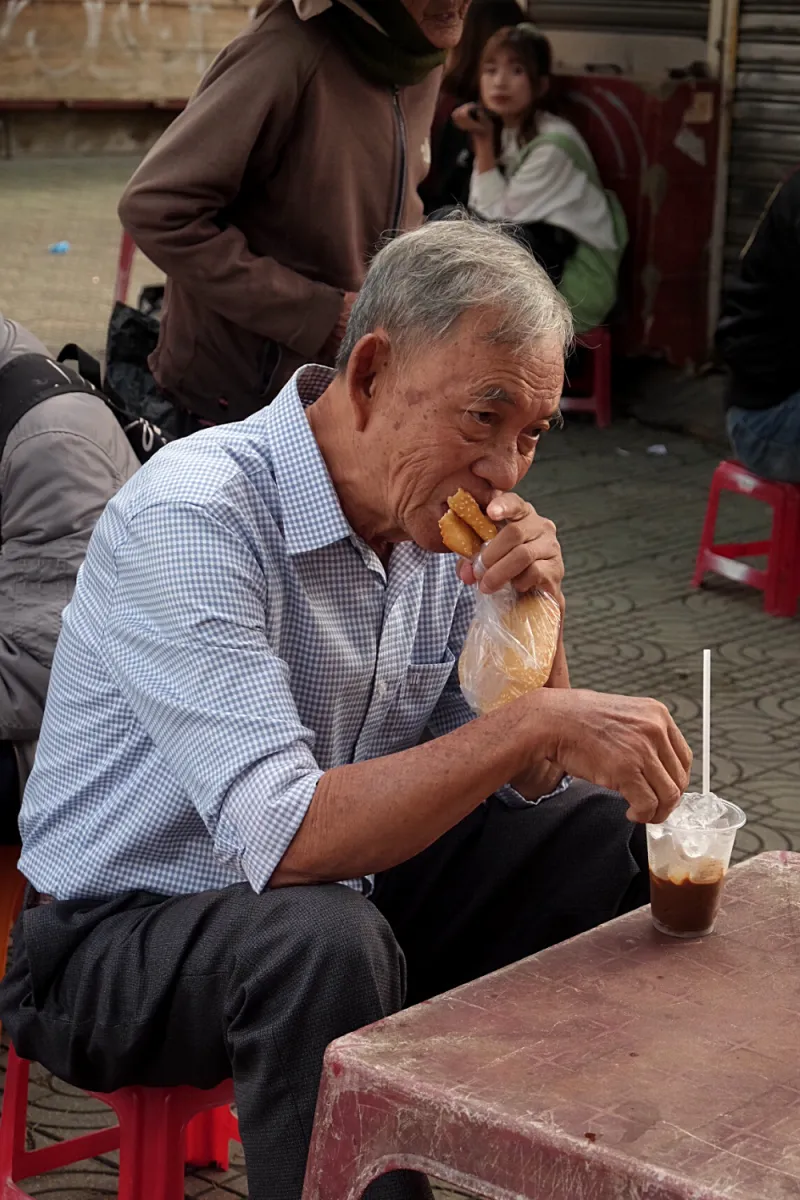
Photo: elderly American expat man coffee shop Saigon street cafe, via i.pinimg.com
The Return Nobody Predicted
There's a particular image burned into the American imagination of Saigon: April 1975, rooftop staircases, helicopters, a city being fled. What almost no one of that generation imagined — what would have sounded absurd, even cruel, in 1975 — is that some of the people who left would spend their seventies and eighties choosing to come back. Not to visit. To live.
Spend enough time in Saigon's cafes and you'll start noticing them. American accents at the next table, ordering in passable Vietnamese, greeting the pho vendor by name. Some are former soldiers. Some are the grown children of Vietnamese women and American men, returning to the city of their birth. Some were aid workers, journalists, diplomats' staff. All of them, in one way or another, came back to finish something.
Why Would Anyone Come Back?
Ask them and you'll get as many answers as people, but a few themes repeat like a chorus.
The city forgave faster than the country did. Veterans will tell you — sometimes with visible emotion — that the first Vietnamese person to shake their hand did it without hesitation, and that the kindness broke something open in them. For men who spent decades bracing for hostility, ordinary Saigon warmth was disorienting, then healing.
The cost of memory is lower here. Several describe a strange lightness: in Saigon, they're not walking hospitals or memorials. They're just neighbors. The war is history here — discussed, taught, monetized in museums — but it doesn't follow you down the street the way it can in the States.
The unfinished business. For the Amerasian returnees and the children of wartime couples, the question was never why come back but what took so long. Saigon is where their mothers lived, where their first words were spoken. Coming home to it was less a decision than a gravity.
The City That Moved On
Here's the part that deserves honest reckoning: Saigon did not wait for anyone's closure. The city that these Americans remember is gone — replaced by glass towers, craft beer, and motorbikes in numbers that would have seemed impossible in 1975. Some returnees find this liberating. A few find it quietly devastating.
The ones who thrive are the ones who stopped expecting the city to be a museum of their past. They learn Vietnamese badly and persistently. They join expat volleyball groups and charity foundations clearing unexploded ordnance in the provinces. They become, in the least dramatic sense, residents.
And the Vietnamese, by and large, treat them accordingly — as individuals, not avatars of a war. It's a generosity that would have been hard to predict in 1975, and it says more about this city than any museum exhibit could.
What Their Presence Actually Means
You could read these returnees cynically, as a kind of comfortable irony — the war's losers in a material sense settling happily into its winner's prosperity. But spend an afternoon with any of them and that reading collapses. What you mostly find is people doing the slow, unglamorous work of making peace with a story that never had an ending.
For American travelers, their presence offers something a battlefield tour can't: proof that the story between the two countries didn't end in 1975. It resumed. And it resumed in the most ordinary way possible — over coffee, at the market, on a plastic stool at dawn.
If you're an American visiting Saigon, you'll feel the echoes of that shared history everywhere, from the War Remnants Museum to the street names to the older man at the next table who mentions, almost offhandedly, that he was a nineteen-year-old at Long Binh once. Say hello. Buy him a coffee. You're both, in your own ways, coming home to a city that has made room.