Built to Last, Wired to Hustle: How Saigon Grows Without Forgetting Where It Came From
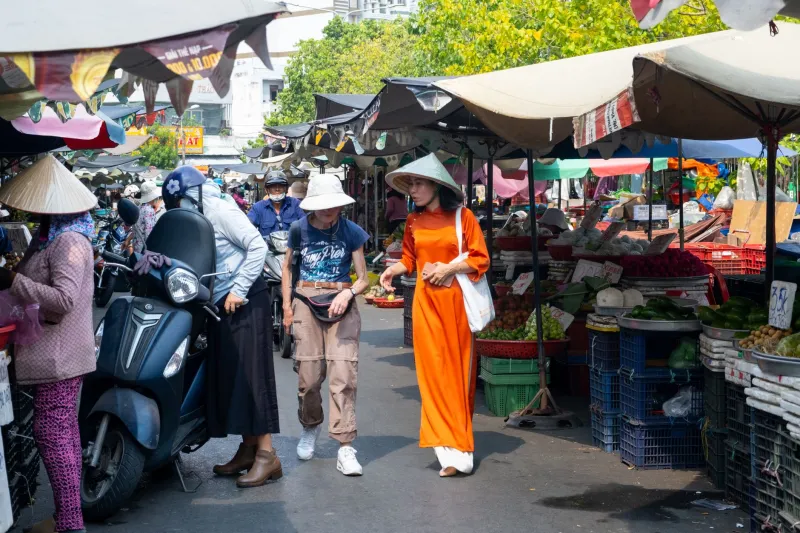
There's a moment every first-time visitor to Ho Chi Minh City experiences, usually on the back of a Grab bike somewhere between Districts 1 and 3. You're threading through a river of motorbikes, a glass tower catching the afternoon light on your left, a woman selling bánh mì from a cart that's probably been in the same spot since the 1980s on your right. And you think: how is this all happening at the same time?
Saigon — and yes, plenty of people still call it that — has always been a city that runs on contradiction. Colonial and postcolonial. Scarred and resilient. Traditional and relentlessly modern. But what's happening here right now feels different from anything in the city's already extraordinary history. The scale of transformation is staggering, and the stakes for what gets preserved in the process couldn't be higher.
The Boomtown Comparison That Actually Fits
Americans have a pretty good template for understanding what Saigon is going through right now. Think Austin in 2010, or Miami circa 2015 — cities that attracted waves of outside money, talent, and ambition, and had to figure out in real time what they were willing to trade away for it.
In Austin, the trade-off was steep. Rents tripled. Beloved dive bars shuttered. The city that built its identity on keeping things weird eventually priced out the weirdness. Miami's story is still being written, but the tension between luxury condo towers and the neighborhoods that gave the city its soul is impossible to miss if you spend more than a long weekend there.
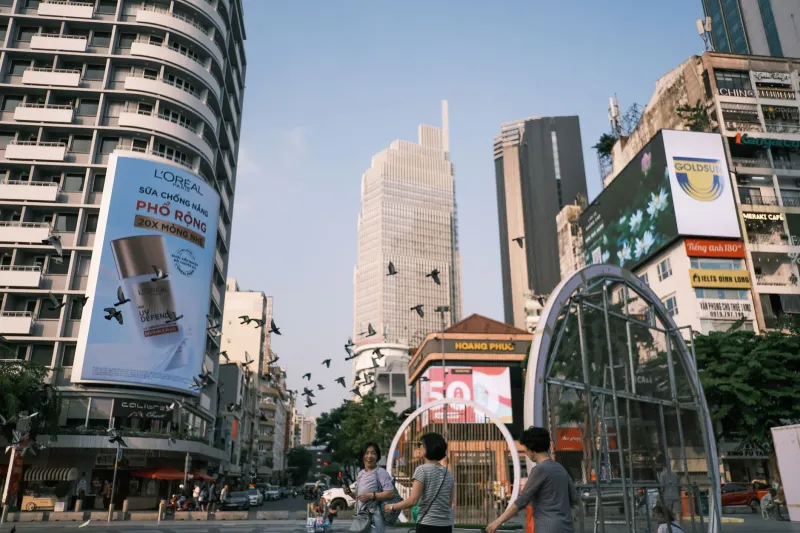
Saigon is facing a version of that same reckoning, but compressed into a much shorter timeline and layered over a far more complex history. Foreign direct investment into Vietnam has surged past $18 billion annually in recent years. Tech startups are sprouting across the Thủ Thiêm district. International chains are planting flags in spaces that used to belong to family-run noodle shops. The city is being noticed, and being noticed always has a price.
 Photo: Thủ Thiêm, via allthatsinteresting.com
The People Keeping the Receipts
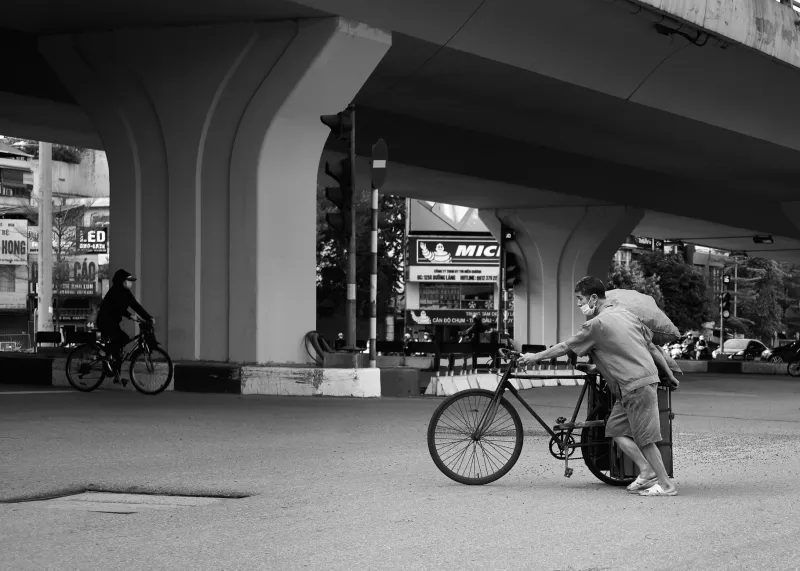
Walk through Bình Thạnh district on a weekday morning and you'll find Minh, a 58-year-old tailor who has operated out of the same narrow shophouse for over three decades. He's watched four buildings on his block get demolished and replaced since 2015. He's not bitter about it, exactly — his own business has benefited from the influx of expats who want custom suits. But he's clear-eyed about what's being lost.
 Photo: Bình Thạnh, via play-lh.googleusercontent.com
"The new people come, they spend money, that's good," he says, pressing a seam flat with practiced ease. "But they don't know the stories of this street. They don't know who lived here before."
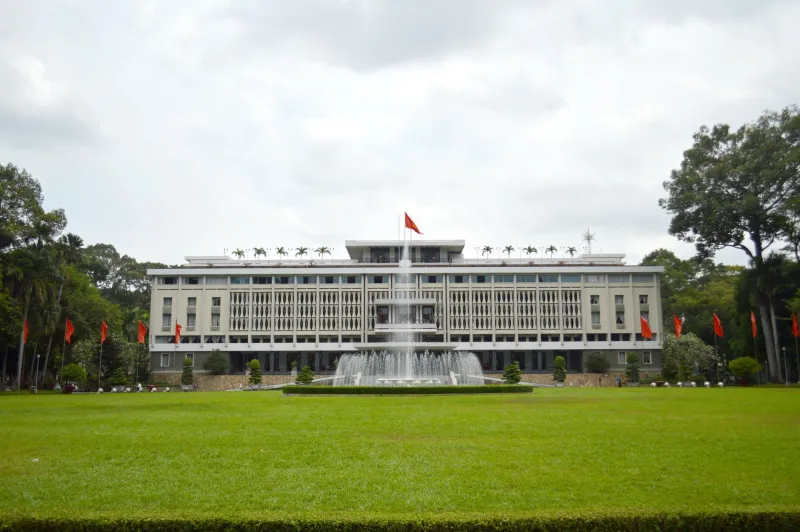
That tension — between economic opportunity and cultural memory — is what architects like Nguyễn Hòa Hiệp are trying to navigate professionally. Hiệp, who trained in both Hanoi and Singapore, has become one of the more vocal advocates for what he calls "adaptive preservation" — the idea that old structures don't need to be museums to be saved. They just need to be useful.
"Saigon has always absorbed outside influence and made it its own," he explains. "The French came, the Americans came, and you can still see both in the architecture. The question now is whether the current wave of investment gets absorbed into the city's identity, or whether the city's identity gets absorbed into the investment."
The Startup Layer
One thing that separates Saigon's current moment from the boomtowns of the American South and Southeast is the homegrown energy driving a significant chunk of the change. This isn't just foreign capital landing on passive soil. Vietnam's startup ecosystem — centered almost entirely in Ho Chi Minh City — has produced unicorns, regional players, and a generation of founders in their 20s and 30s who grew up watching their parents rebuild from nothing and decided ambition was the family business.
The co-working spaces clustered around Lê Thánh Tôn and the emerging tech corridor in District 7 buzz with the kind of productive chaos that feels genuinely earned rather than manufactured. These aren't WeWork outposts for digital nomads — they're rooms full of people building companies for Vietnamese consumers, solving Vietnamese problems, in Vietnamese.
That distinction matters. The startup boom isn't importing a foreign culture so much as it's generating a new local one, and that new local culture has deep roots in the same scrappy, improvisational energy that has defined Saigon street life for generations. The city's famous ability to hustle — to turn a sidewalk into a restaurant, a doorway into a shop, a motorbike into a logistics operation — is just scaling up.
What the Street Still Knows
Here's what no amount of foreign investment has managed to disrupt: the morning coffee ritual. The wet market that opens at 4 a.m. The alley shrines draped in marigolds. The grandmother who has been making the same pot of hủ tiếu for forty years and has no interest in a Yelp page.
Saigon's street-level culture is not just surviving the development boom — in some neighborhoods, it's actively pushing back against it. Community groups in Districts 4 and 8 have organized to document and protect local heritage sites that don't appear on any official preservation list. Young Vietnamese architects and artists are moving into older neighborhoods rather than away from them, drawn by the texture and story that newer developments can't replicate.
Long Hoa, a longtime resident of District 10 who runs a small community archive of neighborhood photographs, puts it simply: "Saigon doesn't preserve things by putting them behind glass. It preserves them by using them every day."
The Verdict Is Still Out
No one who's paying attention will tell you Saigon has figured this out. The pressures are real, the pace is relentless, and there are already neighborhoods that have lost more than they've gained in the exchange. But there's something in the city's DNA — some combination of stubbornness, adaptability, and sheer historical weight — that makes you think it might thread the needle in a way Austin and Miami couldn't.
Saigon has survived colonization, war, reunification, and economic isolation. It has remade itself more times than most cities manage in a millennium. The current transformation is enormous, but it's not unprecedented. And if the people keeping the receipts — the tailors, the archivists, the architects, the grandmothers with their morning soup — have anything to say about it, the soul of this city isn't going anywhere.
The cranes will keep rising. The motorbikes will keep moving. And somewhere in between, Saigon will keep figuring out how to be exactly, stubbornly itself.