Rich Block, Poor Block, Crane Block: A Street-Level Tour of Saigon's Economic Miracle
Rich Block, Poor Block, Crane Block: A Street-Level Tour of Saigon's Economic Miracle
Here's a number worth sitting with: in 1986, Vietnam was one of the poorest countries on the planet. Per capita income hovered somewhere around $200 a year. The country had been at war, off and on, for four decades. Infrastructure was wrecked. Foreign investment was essentially zero. The government was running a centrally planned economy that, by most accounts, wasn't working.
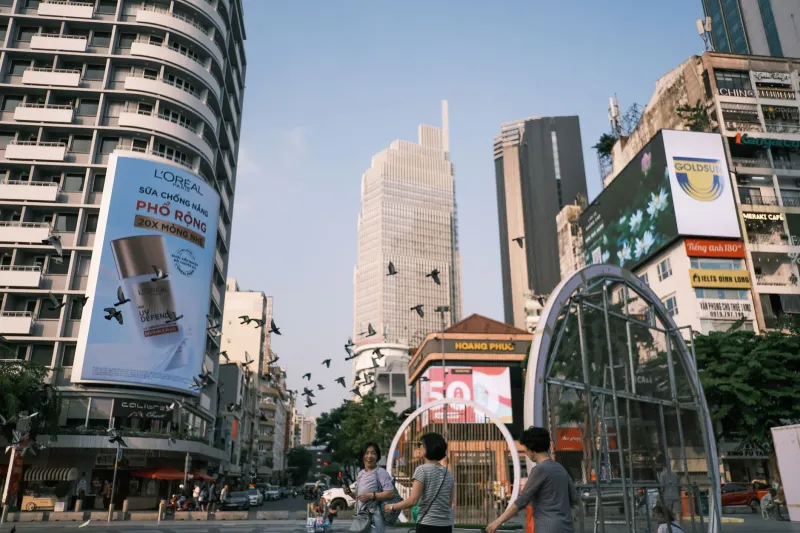
Then came Đổi Mới — literally "renovation" — a sweeping package of market-oriented reforms that cracked the economy open and let the light in. Forty years later, Ho Chi Minh City has a Lamborghini dealership, a skyline that's still visibly growing, and a middle class that didn't exist a generation ago.
 Photo: Ho Chi Minh City, via chameleonmemes.com
But here's what the economic success story usually leaves out: the neighborhoods. The way the money moved — and didn't move — across the city's districts tells you more about Vietnam's transformation than any policy paper ever could. So let's take a walk.
District 1: The Showroom
If Saigon were a person, District 1 would be its LinkedIn profile — curated, impressive, and designed to be seen.
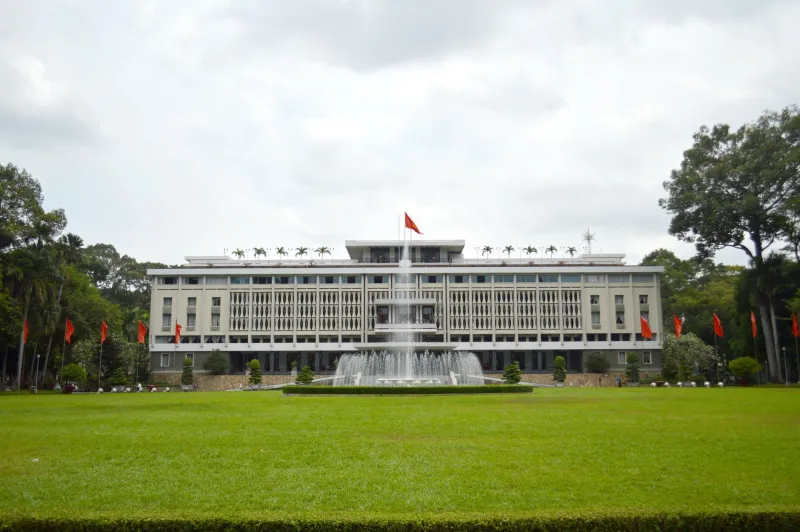
This is the colonial core, where French urban planners laid out wide boulevards lined with tamarind trees, and where the architecture still carries the memory of an empire. The Saigon Opera House, the Continental Hotel, the grand post office — these buildings were built to project power, and they still do, even if the power they represent has changed hands several times since.
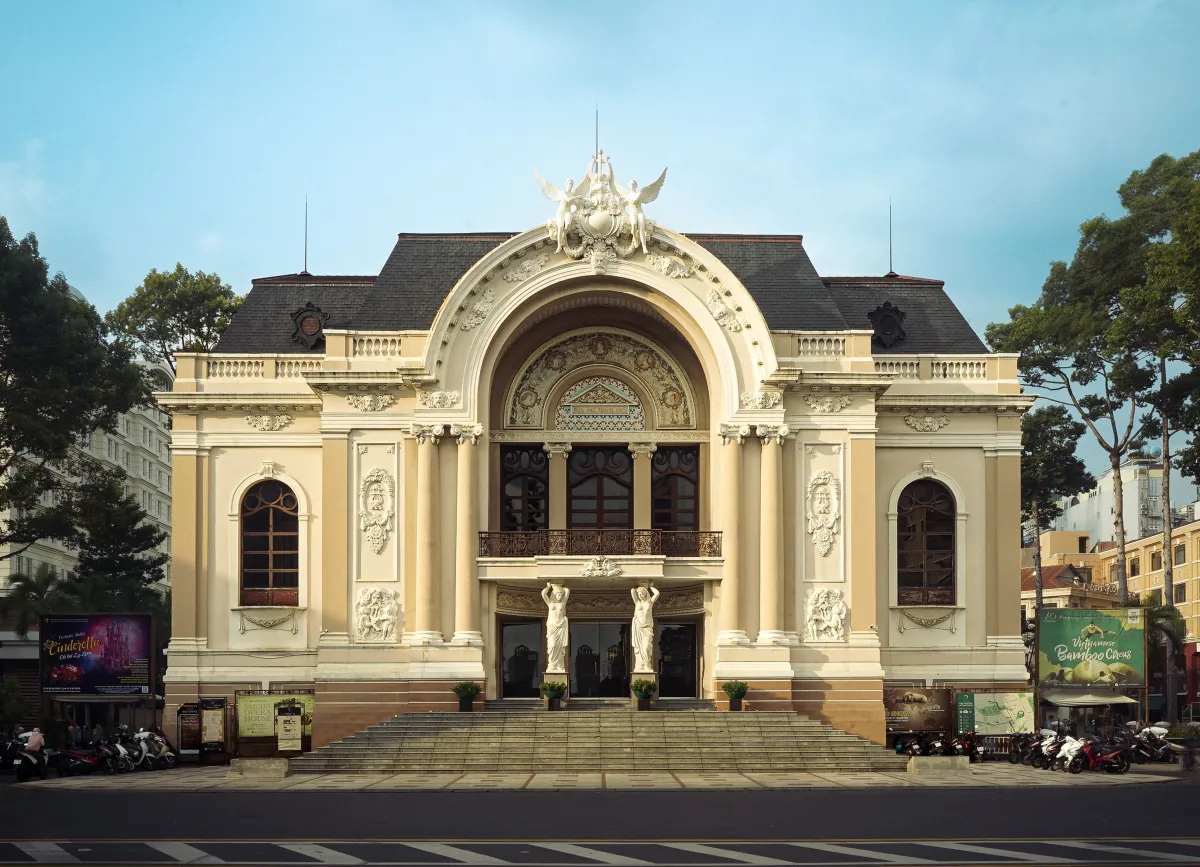 Photo: Saigon Opera House, via images.pexels.com
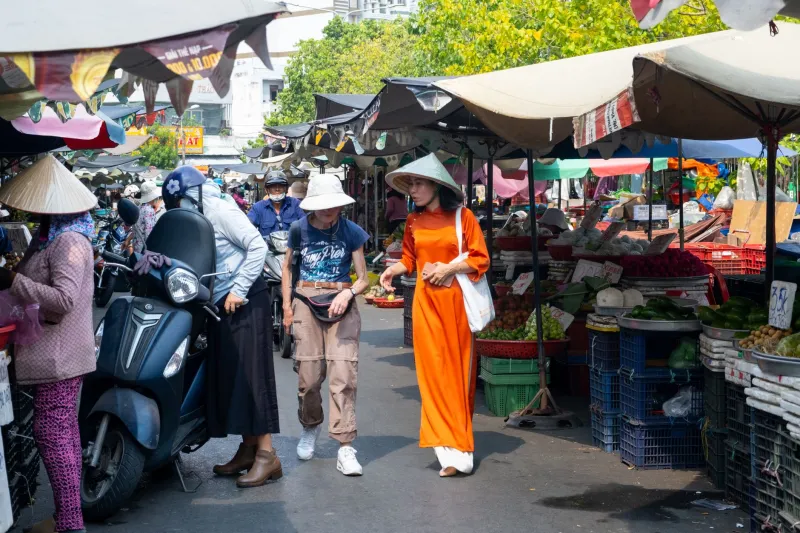
Walk Đồng Khởi Street today and you'll pass Hermès next to a bánh mì cart. A Rolls-Royce dealership sits three blocks from a woman selling lottery tickets on a plastic stool. The contrast isn't accidental — it's the whole point. District 1 is where old colonial money, new Vietnamese wealth, and the global luxury economy all decided to show up at the same party.
The rooftop bars here charge New York prices and fill up every night. The people drinking in them are increasingly Vietnamese — young professionals, entrepreneurs, the children of families that rebuilt from nothing after 1975. That's not a small thing. That's the whole story in a cocktail glass.
Don't miss: The stretch of Lý Tự Trọng Street just after sunset, when the city's energy shifts from business to pleasure and the whole district seems to exhale.
District 3: Old Money With Good Manners
Just north of District 1, District 3 has a quieter kind of wealth — the kind that doesn't need to announce itself. The streets here are lined with French villas that have been converted into boutique restaurants and independent coffee shops. The sidewalks are wider. The motorbike traffic is slightly less homicidal.
This is where Saigon's educated, established class has always lived — doctors, architects, university professors. The neighborhood has a neighborhood feel that District 1, for all its glamour, doesn't quite manage. You'll find some of the city's best independent cafés tucked into old shophouses here, the kind of places where a single well-made Vietnamese iced coffee costs less than a dollar and tastes better than anything you've ever had at home.
District 3 is a reminder that not all of Saigon's economic story is about dramatic transformation. Some of it is about continuity — the quiet persistence of a professional class that survived reunification, the lean years, and the chaos of rapid growth, and came out the other side intact.
District 4: The Scrappy Original
Cross the canal from District 1 and you're in a different city. District 4 is loud, dense, and unapologetically itself. For decades it had a rough reputation — it was the part of town that polite society didn't discuss — but the real story is more interesting than that.
District 4 is where Saigon's working class has always lived and eaten, and its street food scene is, by any honest measure, the best in the city. The seafood grills that line Vĩnh Khánh Street at night draw a crowd that's half local regulars and half food-obsessed travelers who figured out where the real action is. Plastic tables, fluorescent lights, ice-cold Saigon beer, and grilled shellfish that costs practically nothing — this is what economic resilience actually tastes like.
The neighborhood is gentrifying now, slowly. Coffee shops and boutique hostels are appearing between the mechanics' workshops and the wet markets. Whether that's good news or complicated news depends entirely on who you ask.
Visiting tip: Come hungry, come late (9 p.m. or after), and just point at whatever looks good on the grill. You won't go wrong.
Bình Thạnh: The Middle Class Finding Its Footing
Bình Thạnh is where you go to see what Đổi Mới actually built in human terms. This is Saigon's emerging middle-class district — a dense, somewhat chaotic mix of apartment towers, family-run businesses, street food stalls, and the kind of small-scale commerce that happens when a lot of people are all trying to get ahead at the same time.
The district has no single famous landmark and no obvious tourist draw, which is exactly why it's worth visiting. Walk the streets around Bạch Đằng Wharf on a weekend evening and you'll see Vietnamese families doing what middle-class families everywhere do: eating out, window shopping, letting kids run around near the waterfront. The ordinariness of it is remarkable when you understand how recently this kind of ordinary was out of reach for most people here.
Phú Mỹ Hưng: The City That Didn't Exist
In the early 1990s, the area south of the city center — District 7 — was largely swampland. Today it's home to Phú Mỹ Hưng, a planned urban development that looks like someone airlifted a Singapore suburb into the middle of Vietnam.
 Photo: Phú Mỹ Hưng, via i.pinimg.com
Wide, clean streets. International schools. Shopping malls with ice skating rinks. Manicured parks. Gated residential compounds with names like "Scenic Valley" and "Sunrise City." It is, depending on your perspective, either an inspiring example of what rapid economic development can achieve or a slightly surreal monument to what gets lost when you build a city for an aspirational demographic rather than the people already living there.
Both things can be true. Phú Mỹ Hưng is fascinating precisely because it's so deliberate — a vision of modern Vietnam that was willed into existence by a joint venture between the Vietnamese government and a Taiwanese developer, and that has become, against all odds, genuinely popular with wealthy Vietnamese families who want exactly what it's selling.
Thu Duc: The Future, Under Construction
In 2021, Saigon's eastern districts were merged into a single administrative unit called Thu Duc City — technically a city within a city — designated as Vietnam's first "innovation hub." The ambition is enormous: a tech corridor, a financial district, a university zone, all designed to carry Ho Chi Minh City through the next phase of its economic evolution.
Right now, Thu Duc is a place of cranes and construction hoardings and half-finished towers that glow at night like something out of a near-future film. The infrastructure is catching up to the vision, slowly. But come here on a clear evening and look back across the river toward the District 1 skyline, and the trajectory is impossible to miss.
This city is not finished. It is nowhere near finished.
What the Neighborhoods Are Actually Saying
The argument this city makes — quietly, constantly, through its streets and its skyline and its people — is that reinvention is possible at a scale most of us can't quite imagine. Not painless reinvention. Not equitable reinvention. But real, measurable, visible transformation within a single human lifetime.
Saigon's neighborhoods don't hide any of that complexity. The old money and the new money and the no-money all exist within a few kilometers of each other, all hustling in the same heat, all part of the same improbable story.
Walk it. All of it. That's the only way to actually understand what happened here.