Two Names, One City: What Saigon's Identity Crisis Tells You About Modern Vietnam
Two Names, One City: What Saigon's Identity Crisis Tells You About Modern Vietnam
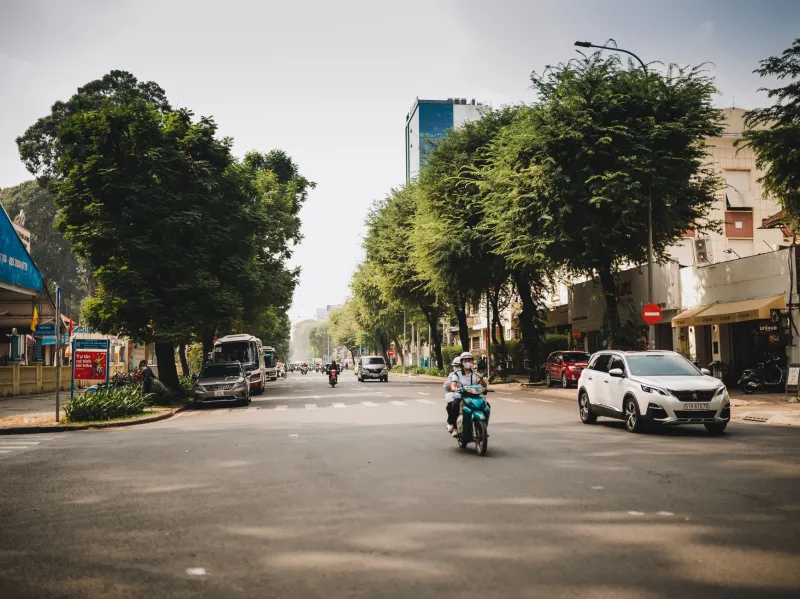
You land at Tan Son Nhat Airport, grab your bags, and slide into the back of a Grab car. The city outside the window is a blur of motorbikes, neon signs, and construction cranes. You ask the driver where he's from. He grins into the rearview mirror. "Saigon," he says, without a beat of hesitation.
 Photo: Tan Son Nhat Airport, via cdn.sanity.io
Except, officially, Saigon hasn't existed since 1976.
This is one of the first things that catches American visitors off guard — the city has two names, and both of them are used constantly, often by the same person in the same conversation. Understanding why isn't just a fun trivia fact. It's a master key to understanding Vietnam itself.
A Tale of Two Names
The city's official name is Ho Chi Minh City, renamed in honor of the revolutionary leader who unified Vietnam after decades of war. The renaming happened in 1976, a year after the fall of Saigon, and it was a deliberate political statement — a marker of a new era, a socialist republic, a country reborn.
But "Saigon" never really left. It lives on in the names of streets, businesses, newspapers, and — most tellingly — in the mouths of the people who actually live there. The local beer is Saigon Beer. The main river is still called the Saigon River. Even the city's official abbreviation in Vietnamese addresses, "TP.HCM," gets casually shortened to "Sài Gòn" in casual speech.
 Photo: Saigon River, via cdn.pixabay.com
For American visitors, the closest cultural parallel might be something like insisting on calling a city by its pre-gentrification neighborhood name, or the way some New Yorkers still say "the World Trade Center" when they mean the new towers. Names carry memory. They carry belonging.
What the Older Generation Holds Onto
For Vietnamese people who grew up before 1975 — or whose parents did — "Saigon" is more than nostalgia. It's an act of continuity. Minh, a 68-year-old retired schoolteacher who grew up in the Bình Thạnh district, puts it plainly: "My mother called it Saigon. I called it Saigon. My children call it Saigon. That's the name of the place we love."
For the Vietnamese diaspora in the United States — a community of nearly two million people, many of whom left after 1975 — the word "Saigon" carries even more emotional weight. It's the city of a life interrupted. Community newspapers in Little Saigon, Orange County still use the old name in their mastheads. Vietnamese restaurants from San Jose to Houston call themselves some variation of "Saigon Kitchen" or "Saigon Noodles." The name is a form of memory preservation.
This is something worth holding in mind when you arrive. If you meet someone from the older generation, or someone connected to the diaspora, calling the city "Saigon" is often read as a sign of respect and cultural awareness — not a political statement.
The Younger Generation's Shrug
Here's where it gets interesting. Talk to someone in their twenties or thirties who grew up entirely in post-reunification Vietnam, and you might expect them to use the official name. Many don't — but for completely different reasons than their grandparents.
For young Saigonese, using "Saigon" isn't a political act. It's just... cool. It's shorter, it's got energy, it fits the city's brand as a fast-moving, entrepreneurial, slightly chaotic metropolis. "Ho Chi Minh City sounds like a government document," laughs Linh, a 27-year-old graphic designer who runs a small studio near the Ben Thanh Market area. "Saigon sounds like somewhere you actually want to be."
 Photo: Ben Thanh Market, via www.derwesten.de
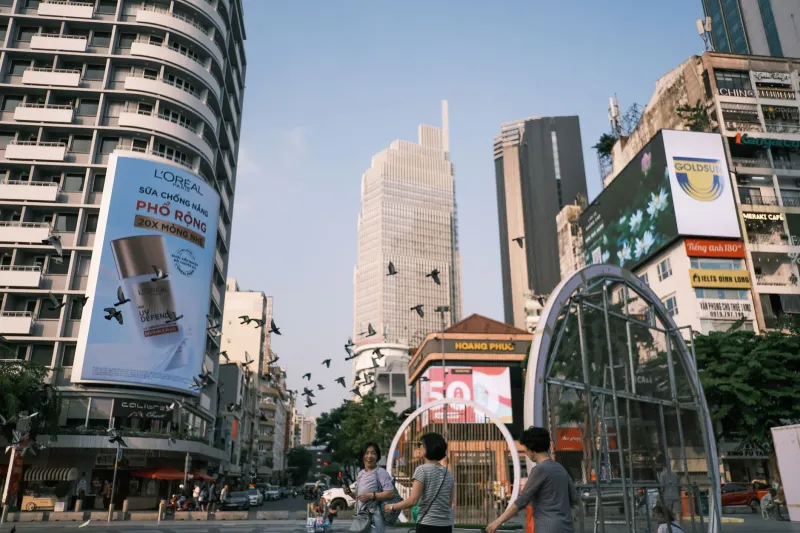
Social media has accelerated this. Instagram handles, café names, and lifestyle brands lean heavily on "Saigon" because it's punchy, internationally recognizable, and carries a certain mystique that the longer official name doesn't quite capture.
The Politics Underneath
It would be naive to pretend the naming question is entirely free of politics. In government contexts, in official communications, in schools — the city is Ho Chi Minh City, full stop. Using "Saigon" in the wrong setting can still raise eyebrows, and for Vietnamese Americans returning to visit family, there's sometimes a careful navigation of which name to use and when.
Historian and cultural commentator Dr. Nguyen Thi Phuong, who has written extensively on post-war Vietnamese identity, describes it as "a living negotiation." In her view, the fact that both names coexist — and that the government has largely stopped trying to enforce a single usage in everyday life — is itself a sign of a society working through its own complexity. "Vietnam is not a monolith," she notes. "The names reflect that."
What This Means for Your Trip
Practically speaking, you can use either name and be perfectly understood. Locals will not be offended by either choice. But if you want to go a layer deeper — if you want to be the kind of traveler who actually connects with the people you meet — knowing the nuance matters.
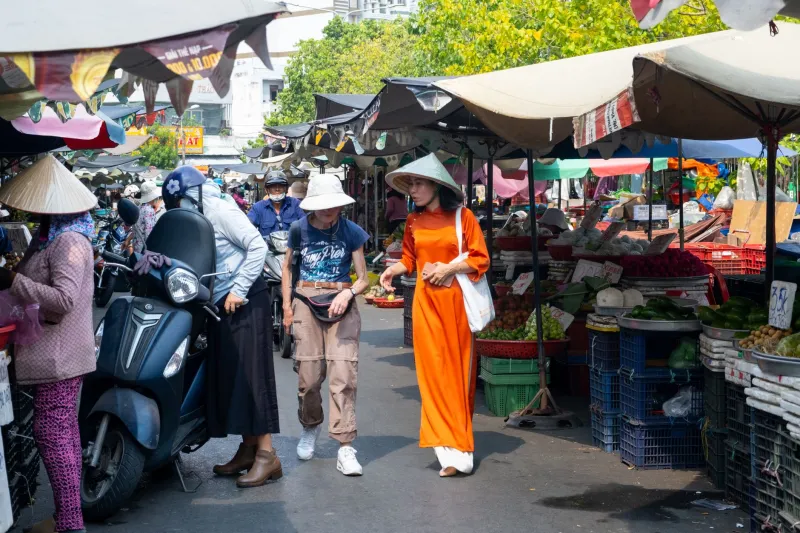
When an older vendor at the Ben Thanh Market lights up because you used the word "Saigon," that's a small moment of genuine connection. When a young startup founder at a co-working space in District 2 talks about "building something for this city" and calls it Saigon with obvious pride, you'll understand that pride differently.
The city's two names aren't a contradiction. They're a conversation — one that's been going on for nearly fifty years, and one that every visitor gets to quietly join the moment they step off the plane.
That's the thing about this place. It doesn't just have history. It wears it, argues with it, and hustles right alongside it, every single day.