What's in a Street Name? In Saigon, Everything — and It Keeps Changing
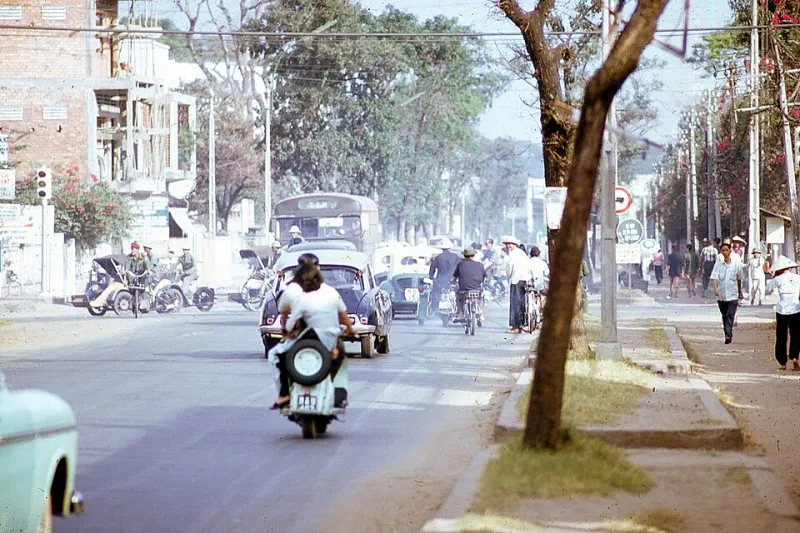
Photo: AaronPogs, CC BY-SA 4.0, via Wikimedia Commons
Ask a cab driver in Ho Chi Minh City to take you to Đồng Khởi Street and he'll know exactly where you mean. Ask an older resident in District 3 for directions to the same street using its pre-1975 name — Tự Do — and they'll know that too. Use the name the French gave it — Rue Catinat — and you might get a look, but someone over 70 will probably nod.
One street. Three names. All of them, depending on who you're talking to, still in use.
This is what it means to navigate Saigon's geography. The map is never just a map.
A City That Keeps Renaming Itself
Street renaming is a global phenomenon — cities in the American South have been wrestling with Confederate monument names for years; post-apartheid South Africa systematically renamed its cities and thoroughfares; Berlin has cycled through names with each political shift. But few cities have done it as frequently, as thoroughly, or with as much layered consequence as Saigon.
The Vietnamese imperial court named streets and districts according to cosmological and auspicious principles. The French, arriving in the mid-19th century, replaced most of those names with the surnames of French officials, military figures, and colonial heroes. After independence, the Republic of Vietnam (South Vietnam) renamed them again — a mix of Vietnamese historical figures, nationalist heroes, and abstract ideals like freedom (Tự Do) and independence (Độc Lập). After reunification in 1975, the new government renamed them once more, this time honoring revolutionary figures, communist heroes, and dates significant to the socialist state.
That's four rounds of systematic renaming in roughly 150 years. And it's not finished. Contemporary commercial pressures, urban development projects, and occasional political recalibrations continue to tweak the map.
"Every name change is an argument," says Trần Quốc Hùng, a historian at a Ho Chi Minh City research institute. "It's a claim about whose history matters, whose heroes deserve to be remembered, whose version of the city is the real one."
The Names That Refused to Die
Here's what makes Saigon different from other cities that have gone through similar processes: the old names don't disappear. They go underground.
In neighborhoods where families have lived for three and four generations, the pre-1975 names for streets, markets, and districts are still used in daily conversation — not as political statements, necessarily, but as simple habit. The name a grandmother used is the name her granddaughter uses when giving directions to family. The name a neighborhood has called its own market square for fifty years doesn't evaporate because a municipal sign says something different.
Phương, a 34-year-old restaurant owner in District 5, uses a mix of old and new names without apparent ideological intent. "My grandmother calls it one thing, my phone's GPS calls it another, my customers from the north use the official name. I just use whatever works for whoever I'm talking to."
This linguistic flexibility — holding multiple naming systems simultaneously — is a distinctly Saigonese skill. It's also, historians note, a form of passive cultural resistance. To keep using a name that's been officially erased is to insist, quietly, that the erasure was incomplete.
Lost in Translation, Lost in Time
For American visitors, the naming complexity creates a specific kind of navigational vertigo. Travel guides written in different decades use different names for the same places. Historical accounts of the Vietnam War use street names that technically no longer exist. Hotel concierges, tour guides, and Google Maps don't always agree.
But the confusion is also a doorway into the city's actual history. When you discover that the elegant boulevard you're walking down was once called Rue de la Somme, then Phan Đình Phùng, and is now Nguyễn Đình Chiểu, you're holding a compressed version of Saigon's entire modern political history in a single address.
Each layer of naming tells you who was in power and what they valued. The French names honored empire. The Republic names honored Vietnamese sovereignty and idealism. The post-1975 names honored revolution and sacrifice. The pattern isn't hard to read once you know to look for it.
"The street names are a political text," says Trần Quốc Hùng. "And unlike most political texts, you walk on it every day."
The Commercial Pressure Nobody Talks About
The renaming process isn't only political in the old-fashioned sense. Increasingly, commercial interests shape how Saigon's geography gets described and branded — if not always officially renamed.
Neighborhoods acquire informal commercial identities that override official designations in tourist-facing materials. "The Backpacker District" is how Phạm Ngũ Lão gets described in most English-language travel content, despite that being a colloquial marketing term rather than an official designation. Luxury hotel and retail developments in District 1 have rebranded their surrounding blocks with English-language neighborhood names that appear on no official map but circulate freely in expat and tourist media.
This commercial layer of renaming is subtler than the political kind but operates on similar logic: whoever controls the name controls the narrative, and therefore, to some extent, the value.
Long-time residents in areas being rebranded for tourism and development often express a version of the same frustration. "They're calling our neighborhood something we've never called it," says Bùi Thị Thanh, who has run a hardware store in a rapidly gentrifying block near Ben Thanh Market for 30 years. "It's for the foreigners. It has nothing to do with us."
What Gets Lost When the Name Changes
The practical consequences of serial renaming extend beyond confusion. Local knowledge systems — the mental maps that longtime residents use to navigate their city — are built around names. When names change, that knowledge becomes partially untransmittable to younger generations.
A grandmother who can describe her childhood neighborhood in precise detail, street by street, is describing a geography that may no longer exist in any official form. Her grandchildren, navigating by GPS and current signage, are moving through a different city — technically the same place, experientially a different world.
This is the quieter cost of renaming: not the political argument, which is at least visible, but the erosion of the intimate, personal geography that makes a city feel like home rather than a location.
The Map You Can't Download
If you want to understand Saigon — really understand it, not just visit it — pay attention to what people call things when they think you're not listening. The old name slipping into a sentence. The gesture toward a street corner that the speaker calls something different from the sign overhead.
That gap, between the official name and the lived name, is where the city's real history lives. It's not on any map. It's not in any guidebook. It's in the mouths of people who remember what this place was called before someone decided it needed to be called something else.
Saigon itself is the best example. The city's official name has been Ho Chi Minh City for fifty years. And yet.